
Shopify was born when computer programmer Tobias Lütke wanted to launch a snowboarding shop called Snowdevil in the mid 2000s. Not satisfied with the existing ecommerce providers on the market, he decided to put his skills to good use and create his own.
Fast forward to today and Shopify is a website builder that allows entrepreneurs and small business owners to create amazing online retail stores. Shopify’s features have attracted a large user base. There are now over 6,000,000 Shopify websites online, spanning 175 different countries.
Its popularity is due to Shopify’s range of pricing plans, its customizable (and code-free!) nature and its wide range of marketing, point of sale and accessibility options.
To show you what’s possible, we’re serving up 16 of the best Shopify stores for your inspiration. Successful in terms of design, functionality, and revenue, these Shopify website examples are highly aspirational for both new and existing ecommerce store owners.
Read on to get inspired!
1. Manitobah Mukluks
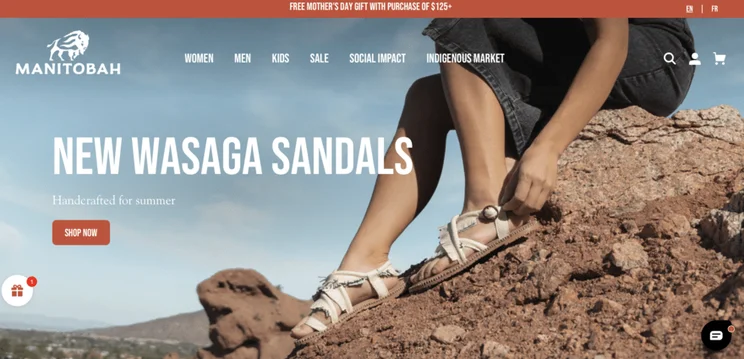
The Manitobah homepage features full-width photos of its products in action.
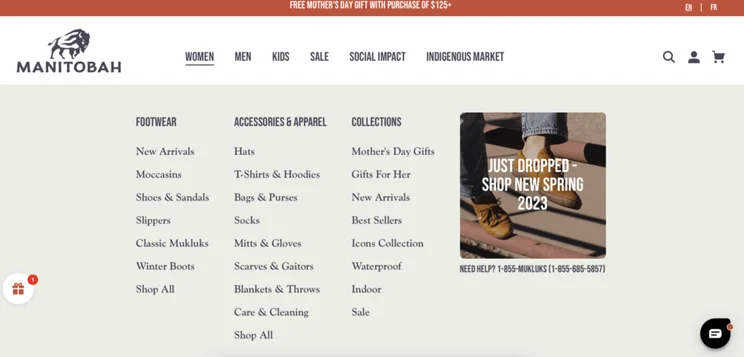
Manitobah Mukluks is a great example of how to direct visitors to relevant product pages via its clear menu.
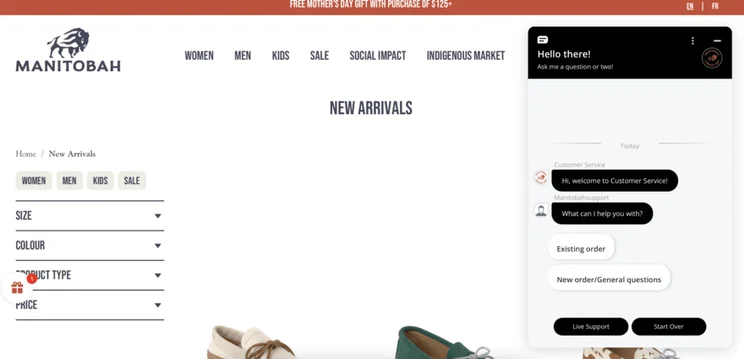
The Manitobah website combines great product imagery with a live chat service for a great user experience.
Manitobah Mukluks is one of the best Shopify stores in terms of the product presentation. The homepage features a full-width image that focuses on footwear while utilizing three punchy adjectives to implore its browsers to head to the ‘moccasins’ section of the store.
Once there, the company’s colorful wares ‘pop’ against a plain white background; drawing the visitor’s focus to the products.
Manitobah Mukluks is one of the best Shopify sites for directing visitors to its product listing pages. This type of vivid photography against a clean background shows the potential of showcasing your site’s products – and their prices – in an aesthetically pleasing, easy on the eye way.
Top tip! Add a live chat to your website like Manitobah Mukluks to help you manage customer service queries quickly and efficiently.
Find Out More
- If you want the full story on ecommerce website builders, check out our neat ecommerce comparison chart.
- Still undecided? Read our review of the best ecommerce website builders and get our in-depth thoughts and rankings.
2. Give Me Tap!
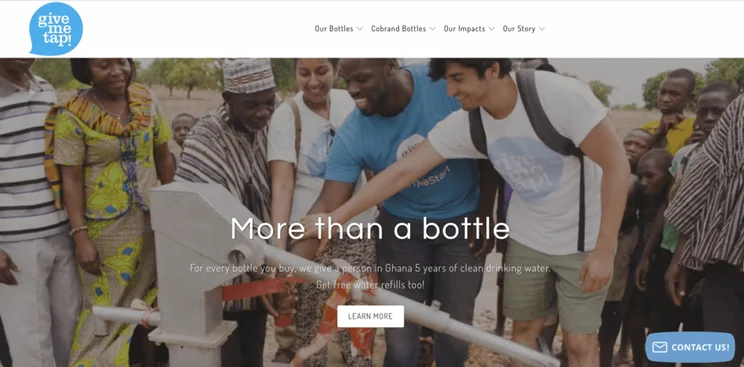
The Give Me Tap! website features an uplifting, full-width video banner.
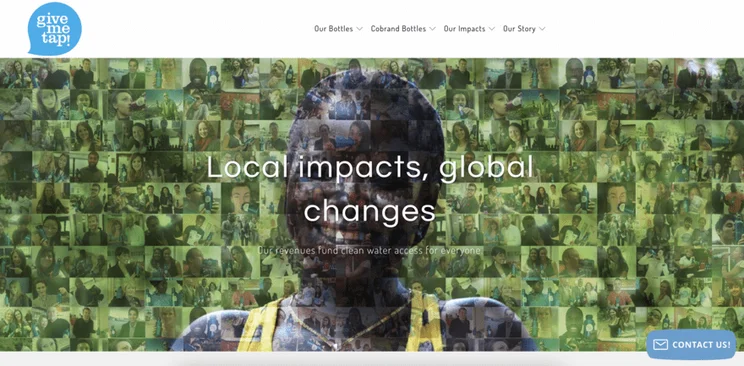
The Give Me Tap Shopify website focuses on showcasing the brand ethos and mission.
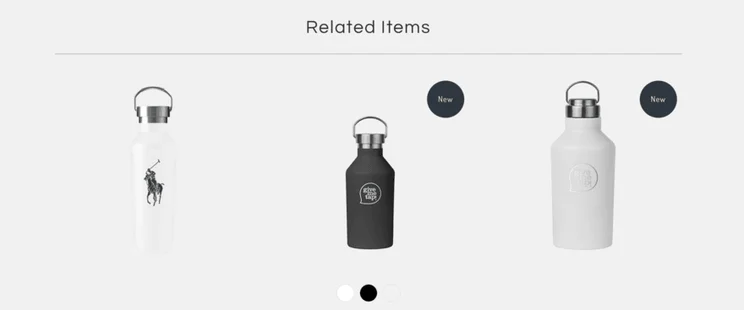
Using related items on your Shopify store like Give Me Tap! does, is a great way to match customers with your items.
From the moment you arrive on Give Me Tap!’s Shopify store, you’re uplifted with a wide video header – which shows the beneficiaries of GiveMeTap products celebrating – that makes you stop and shop. Then, each product page uses bullet points to describe the company’s products, and inform people of their social cause. Customers can browse different color options at a glance, while product mock-ups help turn browsers into buyers. One of the best features about Give Me Tap!’s e-commerce store is the ability to shop its main product right from the homepage.
Top tip! Be inspired by Give Me Tap!’s website and be sure to promote your brand ethos and mission throughout your website. Showcase to users how their purchase can make a difference.
3. BLK & Bold
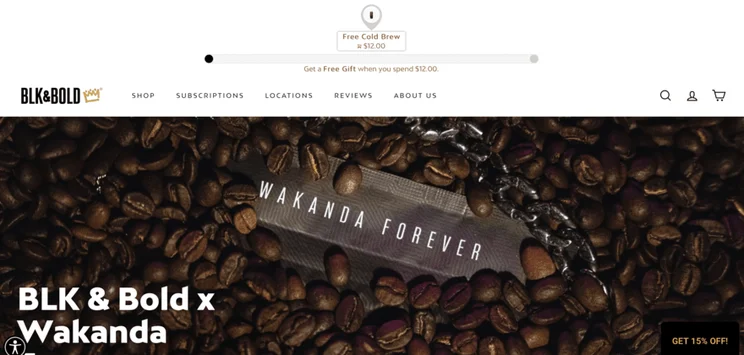
The BLK and Bold website showcases the brands color scheme and branding throughout.
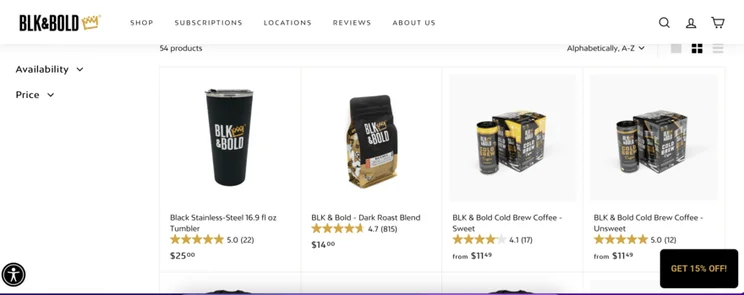
Reviews are important for customers' decision making, so be sure to feature ratings clearly like BLK & Bold's store!
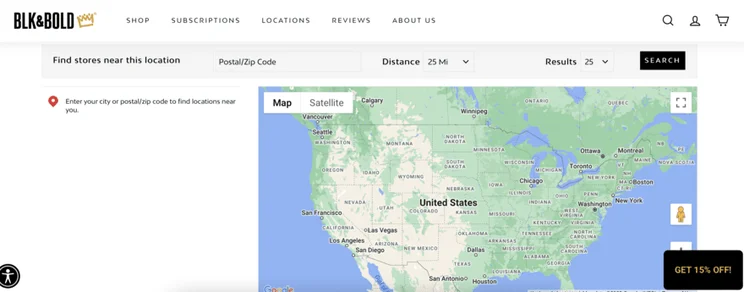
Some customers still prefer shopping in-person, so BLK & Bold makes it easy with this store location map.
BLK & Bold’s Shopify store plays on the abbreviated first word of their company name (black). Black headers and footers, images of branded packaging, and bold, outspoken font styles infuse the site with a slick, aesthetically-driven look and feel. The aesthetic of the website mirrors the aesthetic of the products, helping to create a strong brand that runs both online and offline. There’s also a dedicated location page that allows customers to find in-person stockists of the brand in their local area.
Top tip! A strong color scheme, like BLK & Bold’s black and gold scheme, helps you to create a strong brand identity. Ensure the branding on your website matches the branding of your products.
4. Allbirds
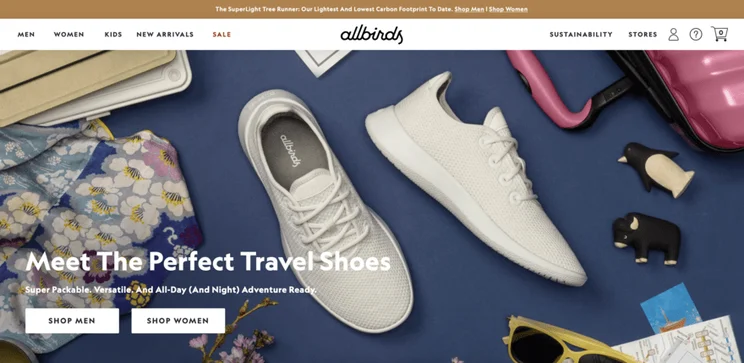
The Allbirds website uses high-quality product imagery to catch the eye of users.
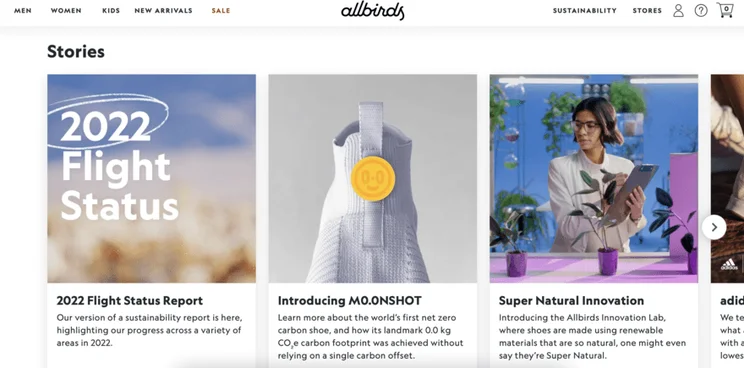
Running a blog like this can help show your customers that you're experts in your products or industry.
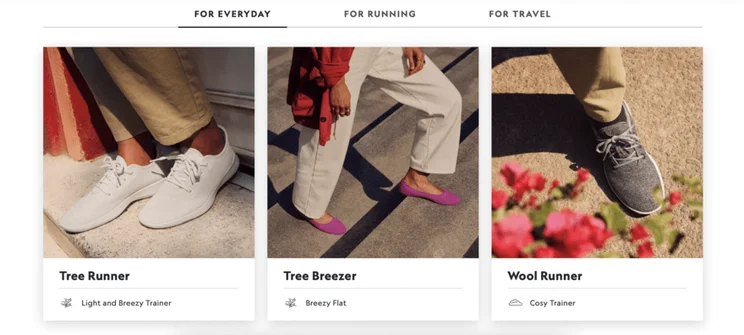
Allbirds is the perfect example of how product photos don't have to boring!
Allbirds is soaring in popularity with runners and athleisure fashionistas who value sustainable apparel. Established by two Kiwis – one based in renewables, the other an ex-soccer player – Allbirds draws inspiration from New Zealand’s sustainable merino wool. It’s also a great example of one of the most tactile Shopify example sites, particularly in the look and feel of its brand design, logo, and two-tone color scheme. What makes this such a great Shopify website is the way the homepage breaks down some of the brand’s key product categories, helping to engage and inform users and convert them into customers.
Top tip! If your products are bespoke or something different, make sure to include content on your Shopfiy website that gives users all the background information they need.

Valley Rays is a premium Sunglass company based out of Arizona. We make high quality sunglasses using only the most advanced materials so they can hold up to anything life can throw at you. The sun never stops, so neither should your sunglasses.
Q&A
I have been using Shopify since 2015, where I started my first business and ran that up until I sold it in 2022. I started a new business shortly after the sale and started a new site using Shopify.
Shopify has a very trusted reputation in the ecommerce world and I think first and foremost that is what started me on Shopify and what has brought me back time and time again. I also believe their checkout features are top notch and built to reduce friction on the customer journey. I also like the plethora of themes available, from which you are sure to find something that suits your needs.
As I mentioned I love the themes, but I do wish there was more of a standard as far as the editing functionality goes from the different theme creators. I did however find a Shopify expert that is very good at understanding my needs and implementing any design change to the theme that is outside my expertise.
I always recommend Shopify to anyone starting out or even if they have been in business for a while. The hard part of designing a website is done on the backend, and with the themes all you have to do is make site look great and tell a compelling story to your customers.
I recently started a sunglass company with the idea to sell high quality sunglasses at an affordable price. To be able to sell at an affordable price we first needed to only sell online, reducing our overhead, but also spend as little time and money on a website without sacrificing functionality.
5. Gymshark
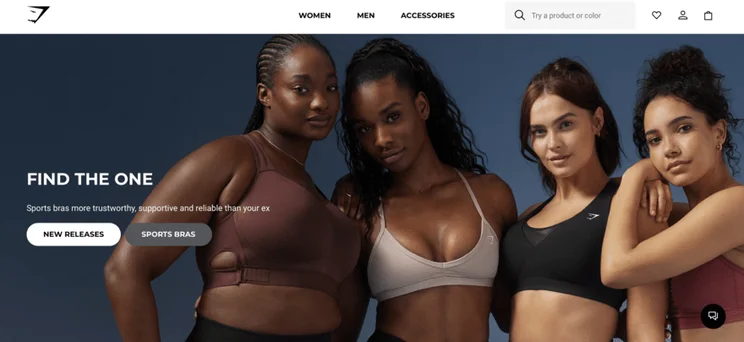
The Gymshark website is stylish and modern, with CTAs visible as soon as you land on the homepage.
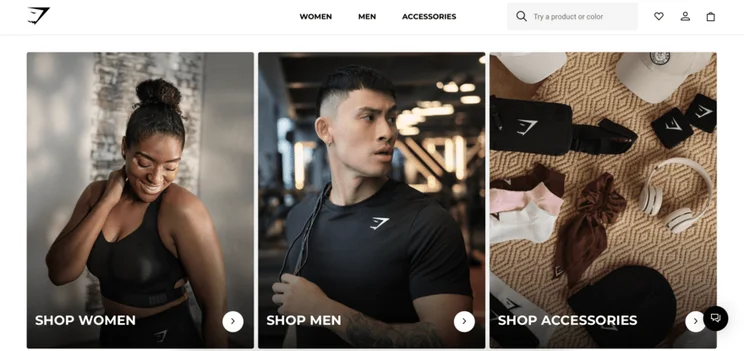
Shopify makes it easy to split inventory into categories, which Gymshark uses here to great effect.
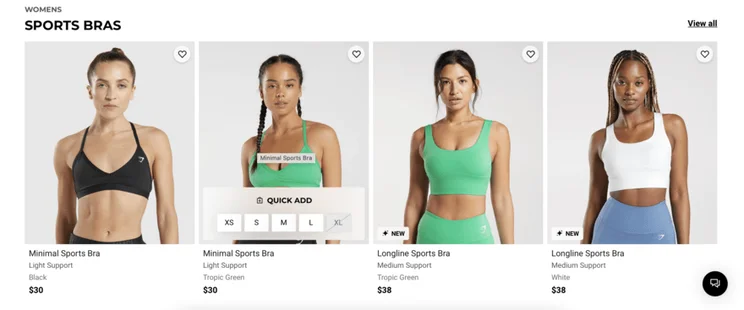
The Gymshark website makes shopping simple with quick add functionality and extensive stock information.
Gymshark’s product’s colors, models, and photography practically screams ‘healthy’, and it’s an excellent example of how one person – with little more than passion, a garage, and a Shopify store – can make it big. The brand has become one of the leading sportswear brands worldwide which means it stocks a vast array of products spanning multiple categories.
Navigating them all is easy for users thanks to a drop down menu that breaks down product listings into key categories and audience types. The product listings also include images of the items being worn by various different models helping users to make informed purchasing decisions.
Top tip! We’d advise apparel companies to include the ‘Quick Add’ feature in their own Shopify store, just like on Gymshark, as this saves busy customers time and disappointment when viewing sizes and availability at a glance.
6. Ruggable
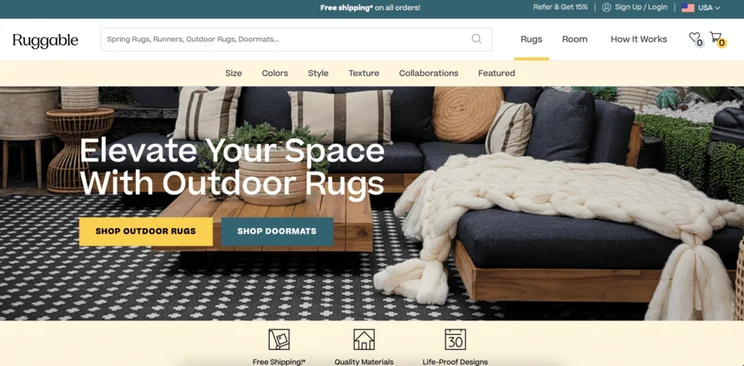
The Ruggable website focuses on what makes their products stand out and why customers should make a purchase.
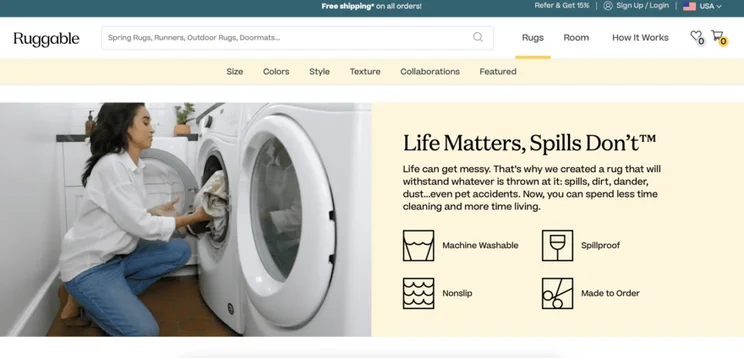
We love how Ruggable gives clear care instructions to help customers get the most out of its products.
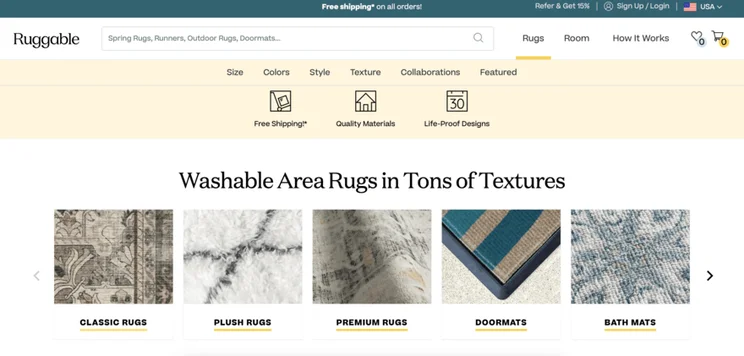
Ruggable is a great example of offering a wide range of categories within your niche.
Ruggable’s Shopify store aims to inform customers of its USPs – namely, machine-washable rugs. With approximately 85,000 unique visitors each month, it’s no doubt an idea that many wish they’d thought of first! Ruggable’s FAQ page, demo video, and various product-filtering methods make it one of the most user-friendly Shopify store examples we found. The promo video on the homepage immediately engages visitors and helps to showcase the product offering.
Top tip! Pop-ups like the one used on Ruggable are a great way to capture users and encourage sign-ups to your newsletter. Be inspired by Ruggable’s and include an incentive, such as a discount or special offer, in yours.
7. Pants and Socks
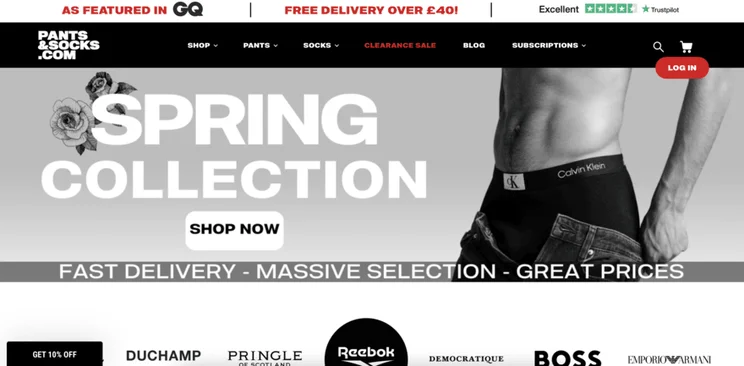
The Pants and Socks website is simple and focuses on displaying products and reviews clearly for users.
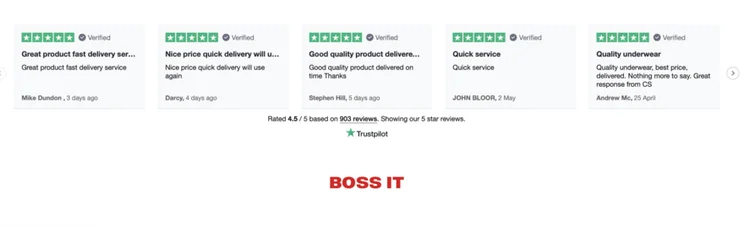
Displaying reviews prominently on your store is a great way of building customer trust.
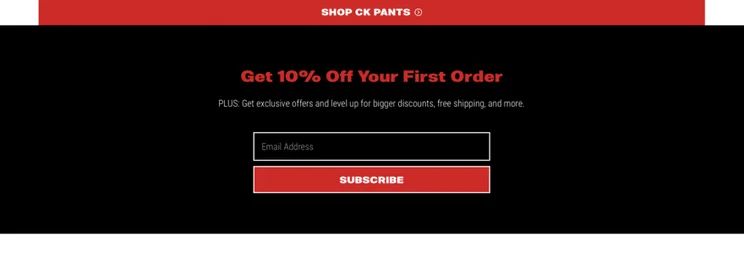
Pants and Socks uses an effective, full-screen newsletter popup with a discount incentive.
Pants and Socks offers men’s underwear and socks from top designer brands in both an online store and subscription model. Subscribed customers get a 20% discount and a choice of whatever product they want. It’s a great way to keep a consistent customer base, and it’s all possible through Shopify’s editor. A great example of how you can adapt Shopify to fit your particular business model! Due to the vast number of products listed on the website, the brand keeps the rest of the site simple, focusing on product listings and product listings alone.
Top tip! For brands that have a large number of products to list, like Pants and Socks, we recommend choosing different image styles (flatlays, model shots, studio shots etc) to keep customers engaged and to prevent your website from becoming too repetitive.

For the launch of Pants&Socks in 2020 during the height of the COVID pandemic, simplicity was key for us, and Shopify is a very solid platform to launch a store from.
Q&A
Our niche is specialty men’s underwear which is a high-margin product for us. We source our products through different vendors such as Calvin Klein, CR7, BOSS, and the French Connection.
Shopify is very easy to use and quite simple to get a store up and running. The app’s plug-and-play features are very nice and quick to pick up. For our company’s launch in 2020 during the height of the COVID pandemic, simplicity was key for us, and Shopify is a very solid platform to launch a store from. I also have had a lot of success with their customer service. They are quick to respond and very respectful and understanding towards what you face as an ecommerce small business owner. The inventory system is also really cool!
I would add a more advanced suite of tools for customization. Once you figure out how to use Shopify, you sometimes find that you want to be able to customize a function, tool, feature, or visual display completely and Shopify doesn’t provide access for this unless you really dive in and learn the programming language.
Nothing really, I was aware of the pros and cons of using Shopify and we consciously made the decision to forgo some customization for an easy-to-implement store.
8. Flourist
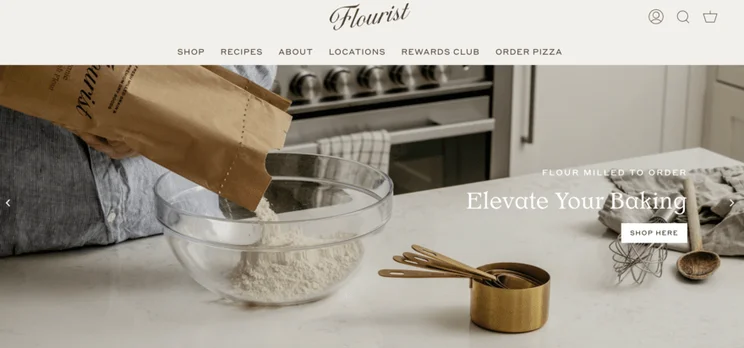
Flourist ensures all its imagery is aligned and on brand to create a cohesive user experience.
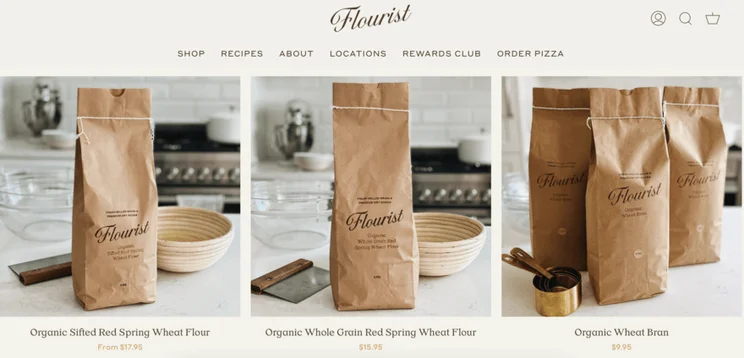
Flourist creates beautiful product photos, proving you don't need "exciting" products to take appealing photos!
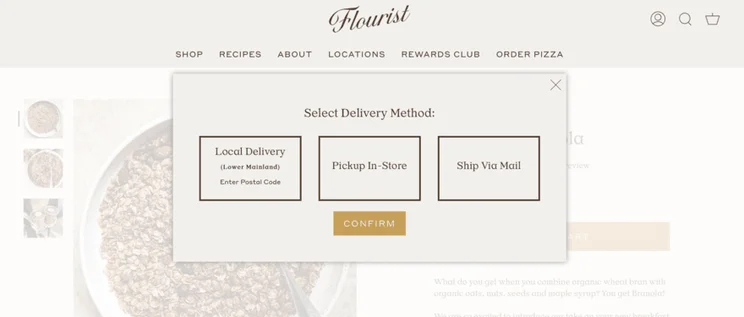
We love how Flourist gives customers multiple delivery options for customers.
Flourist’s website is a hit of mouth-watering food selling special mixes of flour as well as granola, bread and an array of baked goods. What makes this such a great Shopify website is the brand’s use of imagery to sell products and tell a story. Images are of a high-quality and catch the eye and depict food that users will be encouraged to try for themselves, and thus make a purchase. Featuring the brand’s Instagram account on the homepage further enhances the visual storytelling.
Top tip! Be inspired by Flourist and ensure all of your product imagery aligns. Flourist has shot all of its items in the same kitchen set up for brand consistency, helping users to automatically recognize the brand and products.

Q&A
I’ve been using Shopify for over 2 years now – ever since I started my eCommerce business, Home Bar Select. It’s been an incredible ride and Shopify has enabled me to scale quickly, provide excellent customer experience, and manage almost every aspect of running the business from one central platform.
It’s the quickness of everything for me. Shopify is incredibly fast to set up, allowing me to get my store online almost immediately. It’s also lightning-fast when it comes to making changes and updating things – I can quickly make changes on the fly without having to use a developer or wait days for something simple like an email template update.
This one is tough, but if I had to choose one thing it would be a better integration with third-party apps. Don’t get me wrong, Shopify has plenty of amazing apps that can extend its functionality, but sometimes it’s difficult to find the right app and even more challenging to get them integrated properly and running smoothly. So, it would be great to have more options that are already seamlessly integrated with the platform.
Absolutely! Shopify is an incredible eCommerce company. I’m a huge fan of Shopify and would highly recommend it.
I wanted to build an eCommerce website because I saw a great opportunity in the market. I wanted to create something that would allow me to offer luxury products and services directly to customers all over the world, without having to invest huge amounts of money into physical storefronts or warehouses. Shopify made it possible for me to do just that, so I’m incredibly thankful for it.
9. Negative Underwear
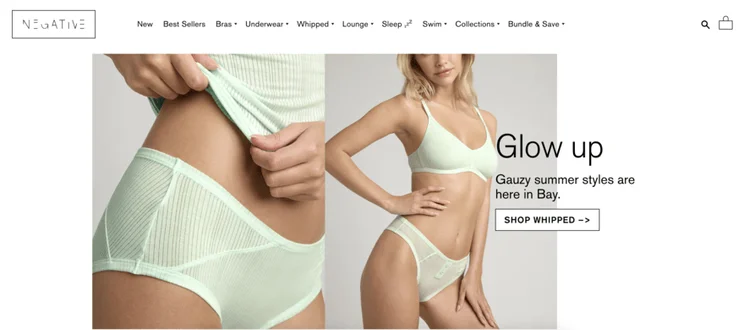
The Negative Underwear website focuses on imagery to help sell its products to potential customers.
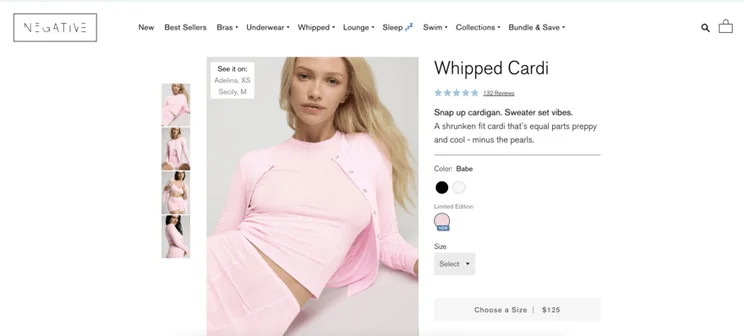
It's a good idea to include plenty of information on your product pages like this example, including pricing, color, and size options.
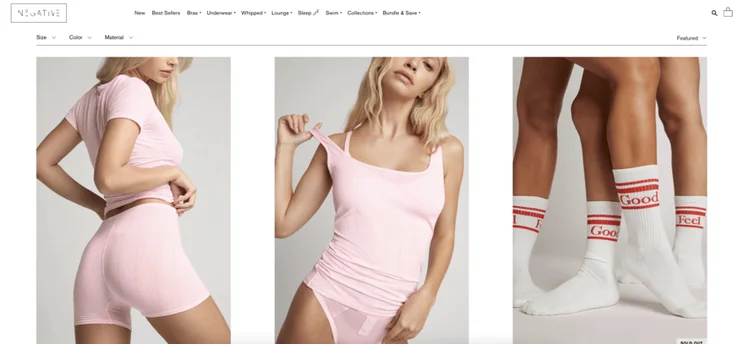
Grouping complementary products that could all be bought together is a smart way of boosting sales.
Negative Underwear makes our list of the best Shopify website examples thanks to how it utilises the platform to speak directly to customers. Aimed at making women feel confident in their bodies, Negative Underwear is picture-heavy, giving customers the chance to see as much of their products as possible before making a purchase.
The drop-down menu is extensive and categorizes the multiple product options into easy to navigate pages to make the overall shopping experience user-friendly.
Top tip! Make shopping on your website super simple for customers and follow Negative Underwear’s lead by allowing customers to shop directly from your homepage. Showcase featured products or specific product categories that can be added straight to users’ shopping carts.
10. Bebemoss
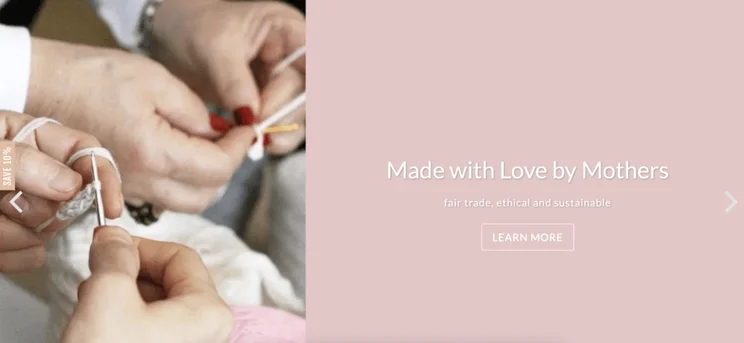
The Bebemoss website does a great job at focusing all of its content towards its key target demographic, mums.
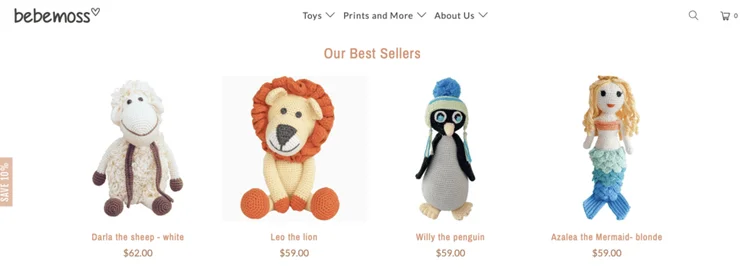
Grouping products under a "Best Sellers" category is a great way to highlight your most popular products!
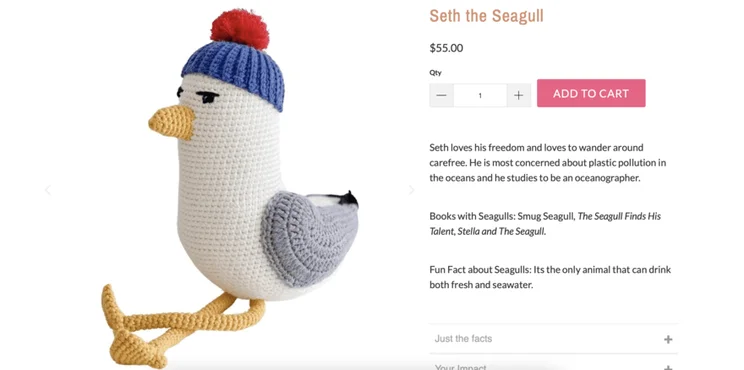
Bebemoss offers a masterclass in writing product descriptions – we love the personality given to Seth the Seagull!
Bebemoss sells adorable hand-crocheted stuffed animals and has adopted a child-like color scheme and simplistic illustrations to emphasize the softness of its products. Also, Bebemoss’ potential customers (mostly moms) will be drawn to the DIY crochet kits, which are offered in a dedicated section of the site as well as the brands promise to empower women through initiatives and donations. This heart-warming Shopify store is bound to connect emotionally with customers; particularly due to its named products, such as “Azalea the Mermaid”.
Top tip! Bebemoss features detailed about us content including profiles on the makers who make the products by hand and information on how the brand gives back to the community. If your items are handmade too, be sure to give potential customers the chance to get to know who makes the items with special and engaging content on your website.
11. Suta
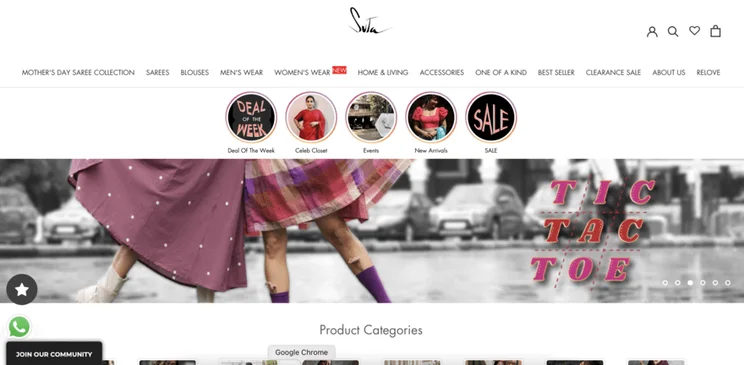
The Suta website is all about offering users a great experience from its easy navigation to simple cart system.
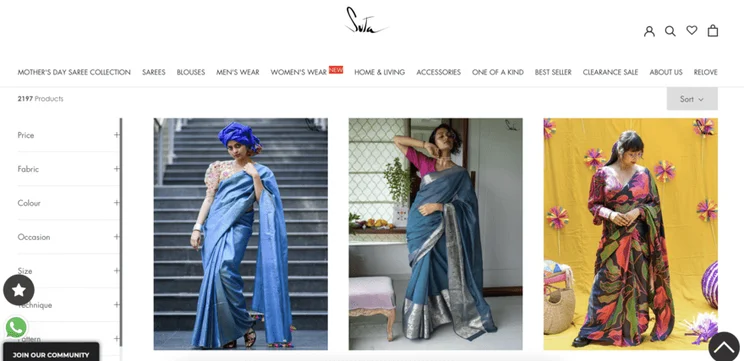
We love how the Suta website shows off its products in colorful and real-life settings.
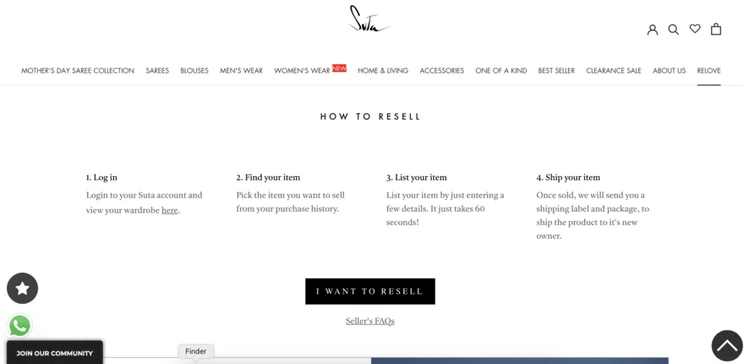
Clear, easy to follow steps for reselling give and extra level to Suta's website for eco-conscious customers.
Suta’s range of sarees – first envisioned by sisters Sujata and Taniya – was inspired by their experiences of shopping in India. Including a special “Sarees under RS 2100” section allows a greater span of customers to try the company’s beautiful wares, while images and videos of models wearing colorful sarees reflect Suta’s vibrant Indian heritage.
One of many wonderful Shopify example sites, we were wowed by Suta’s Relove section which sees the brand sell second-hand sarees at a reduced price, aligning with eco and price conscious shoppers.
Top tip! If your brand is proving popular with influencers or in the press, be sure to include a “Featured In” page like Suta to showcase your coverage and reviews.
12. BioLite
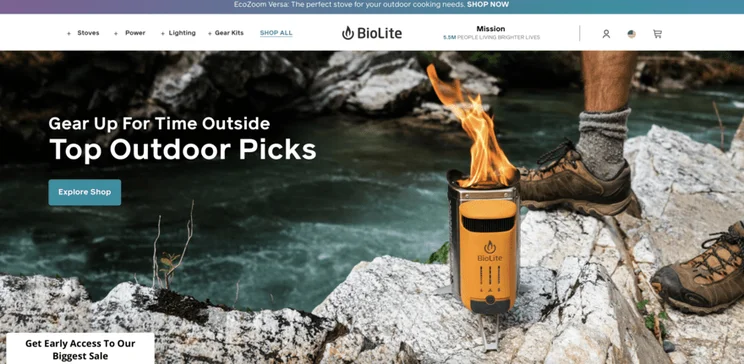
The functionality of BioLite products is mirrored in the functionality of its Shopify website.
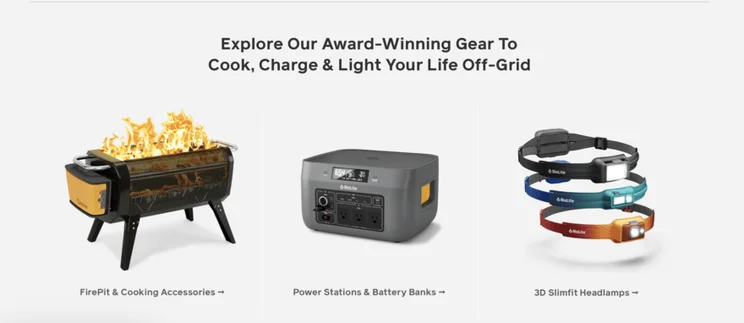
BioLite uses white space to draw the eye to its products.

If you have a mission at the heart of your business, feature this on your site like BioLite does!
BioLite’s functional-looking Shopify store balances products and information perfectly. BioLite’s extensive product catalogue – which features line drawings on the drop down menu – helps customers navigate its wares, while its company timeline is an inspired way of enlivening an “about us” page. But our favorite feature has to be the “Compare” table, which allows you to compare and contrast different products with ease.
Top tip! Don’t feel like you have to play it safe with your Shopify store, no matter what your products are. Be inspired by BioLite and think outside the box when it comes to your about us content; timelines, staff profiles and videos are all great ways to engage users.
13. Kirrin Finch
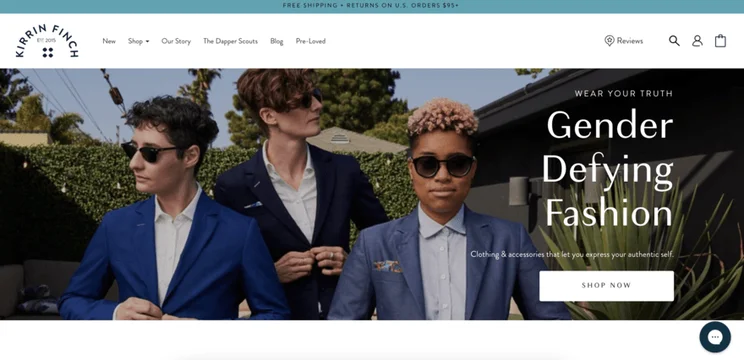
The main selling point of Kirrin Finch is its unique clothing products so it's no surprise that these are front and center of the website.
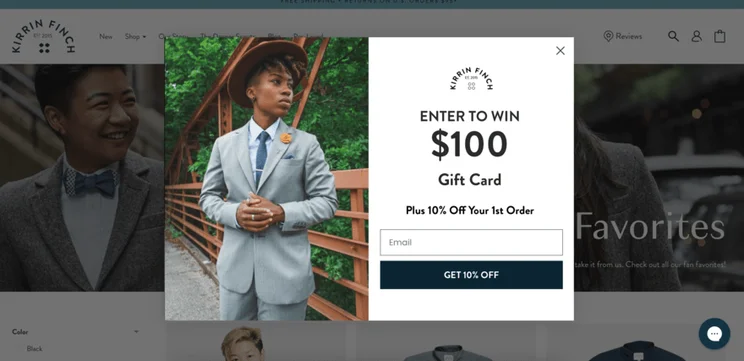
We love how this newsletter features a photo modelling its products as an extra incentive to win that gift card!
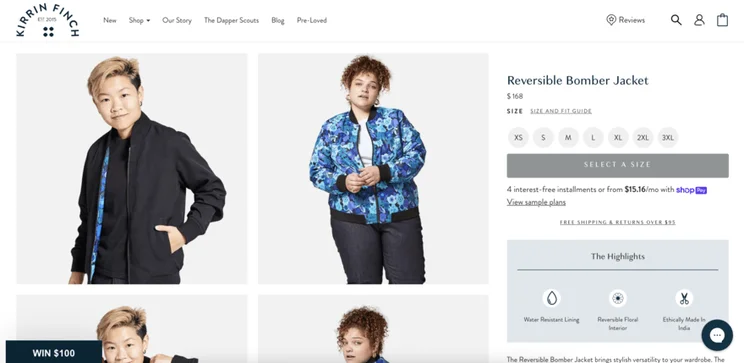
Showing products in different styles and on different models is a great way of appealing to a wider customer base.
Kirrin Finch sells inclusive menswear-inspired apparel for women, through its excellent Shopify store. Identifying a need for tomboy styling, Kirrin Finch lives its brand, with relaxed-looking models and a ‘We care about size inclusivity’ announcement. By encouraging applications to become its community ambassadors (or ‘Dapper Scouts’), Kirrin Finch is one of the best Shopify website examples of how inclusivity can be achieved through ecommerce.
Top tip! Include an FAQ page on your website to help enhance the customer experience and to ensure you’re offering the best customer service possible.

Abaka is a jewelry brand selling fine jewelry and handmade jewelry.
Q&A
I started building my store back in January 2021. It took quite awhile to put everything together. There was liquid programming/html that needed to be done. I had to find a Shopify expert to do that particular job. I launched the website in February 2022.
I did a lot of research and comparisons with different types of selling platforms and I found Shopify to have the most robust applications that I was looking for. Shopify is also a great platform to scale your business.
I wish Shopify would offer more in-house apps.
I wish they can make their existing apps better than the paid apps.
I wish Shopify Themes are ready for SEO. This is the biggest drawback in creating a website. You need traffic!
I wish they have a list of the companies/stores with links on their website to help promote. It’s very hard for a small entrepreneur (like me) to compete with the big guys.
Yes! Absolutely 100%! I would certainly recommend Shopify to anyone who is looking to open an online store.
14. Lunch Skins
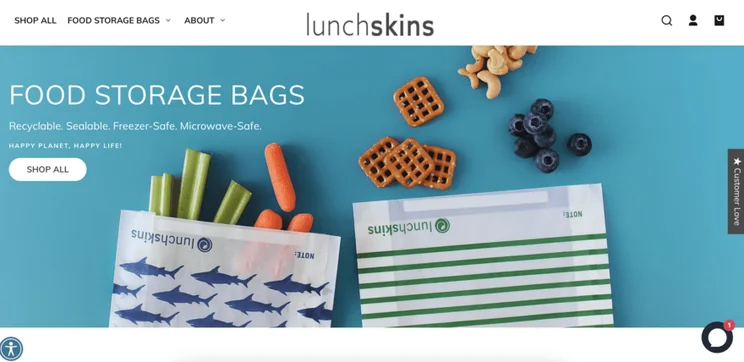
The Lunch Skins website displays content and imagery in a way that immediately engages users.
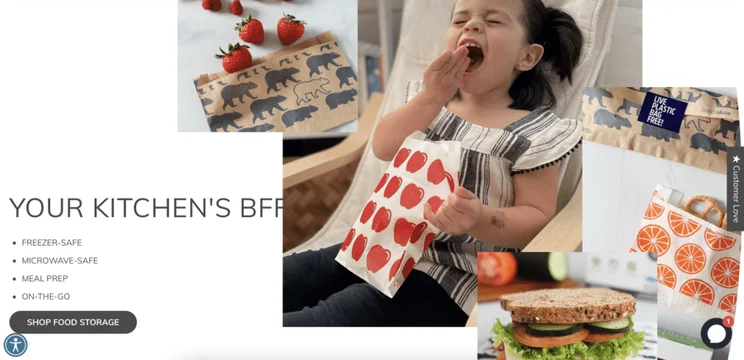
Lunch Skins does a great job of balancing features and benefits of its products.
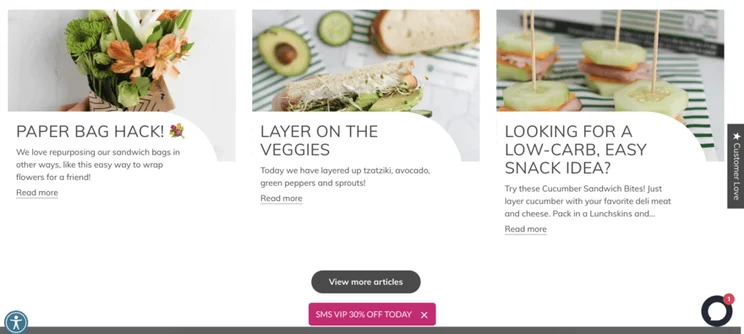
The Lunch Skins website features a blog with handy tips and recipes.
Mom Kirsten Quigley couldn’t believe how much packaging built up in the home. Her Shopify store Lunch Skins – a kind of sustainable, multiple-use shrink wrap for foodstuffs, which emerged from this realization – showcases the product’s fun designs, and offers money-saving bundles for families on a budget. Lunch Skin’s Shopify store’s visitors can easily adjust the text colour, contrast, and even choose an ADHD-friendly profile.
As Shopify website examples go, Lunch Skins’ Accessibility Adjustments are pretty awesome; not only do they allow more people to experience the site, but also – by making their users feel included – motivate them to become loyal customers!
Top top! Think carefully about the images and colors you use on your Shopify store to ensure they are inclusive for everyone. Be inspired by Lunch Skin’s quirky image layouts and try new design ideas.
15. MakerGear
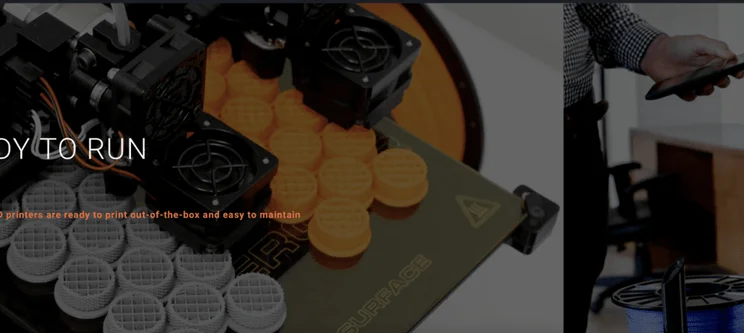
The MakerGear Shopify website is all about simplicity and content.
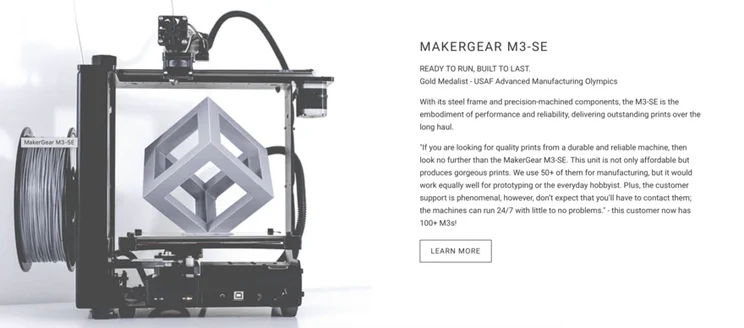
The MakerGear website keeps things modern, minimal, and stylish, avoiding clutter.

Showing other customers that use your product can help build trust.
Ever bought a product, only to lose the software or instructions? MakerGear’s 3D printer Shopify store offers free replacement downloads. Also, by offering its Shopify store’s visitors the ability to subscribe to its newsletter – and share its products via email or on social media – MakerGear has built a comprehensive, multi-channel ecosystem of customers. This no-frills Shopify website puts products and information at its core, focusing on offering users details product information and background.
Top tip! On-site blogs, like the one on the MakerGear website, are a great way of providing users with further information about your products and how to use them, especially for brands selling technical or dangerous equipment.
16. Bulletproof
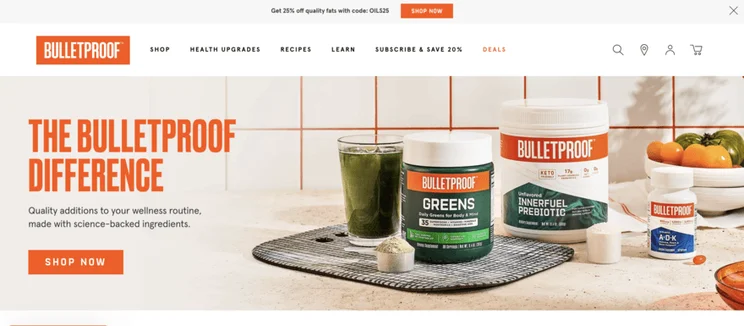
Bulletproof's Shopify website is a great example of a brand combining ecommerce and content to offer the best experience for users.
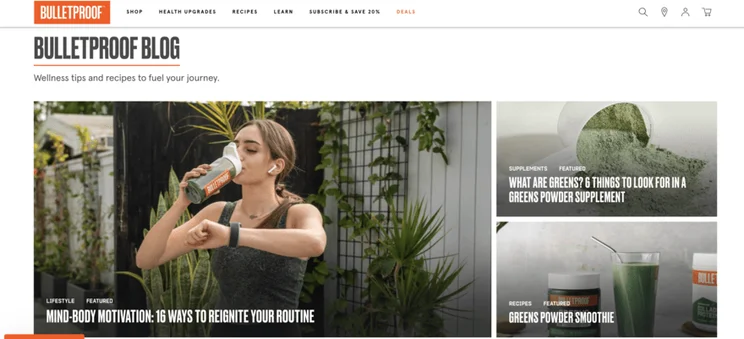
Bulletproof's blog not only provides handy tips, but also makes sure its products are featured in the images!
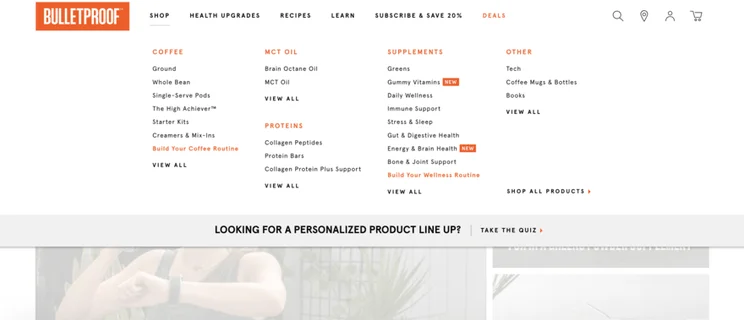
We love the use of this "Deals" category to help customers quickly find great savings.
Bulletproof sells health drinks spanning everything from protein shakes to “healthy” coffee alternatives. The brand makes sure its Shopify website is easy to navigate and bright colors and imagery engages users from the moment they land on the homepage.
The brand is an excellent example of an ecommerce company going further than just offering products and the website has an extensive content and resource section that includes recipes and information about leading a healthy lifestyle.
Top tip! Creating content that compliments your products is a great way to engage users at every stage of their journey. Not everyone will be ready to convert straight away when they visit your website and informative content is a great way of helping to encourage conversions.
Find Out More
Final Thoughts
We hope these Shopify store examples have shown you what’s possible for your business. Whether your goal is functionality, beautiful design, accessibility, or success in building a community, you can build the right Shopify store for you. All of these examples show you that no matter what your brand goals and target audience, Shopify is a great platform for building an ecommerce store that meets your needs.
Rival these best Shopify sites and start building your own Shopify store. You can read our interview with Cameron Heinz, founder of Mobility Nest, for real-life insights on using Shopify to run a business.
Or, if you’re feeling inspired to set up your own Shopify store, but want to know exactly how much it’s all going to cost you, first, check out our guide to Shopify Pricing for everything you need to know.
Good luck!


0 comments