
A solid email marketing strategy will have considered the entire customer journey, from the welcome emails, through to the relationship-building emails, and finally the “sorry to see you go…” emails.
Let’s face it, unsubscribe emails are not the most glamorous aspect of anyone’s marketing plan. But – they are important to get right. This article will break things down to explain what an unsubscribe email actually is, why they’re important, and provide some practical examples of unsubscribe email templates.
If you’re ready to learn more – read on!
What Is an Unsubscribe Email?
First things first, what actually is an unsubscribe email? Naturally, you’ll find that over time some users will want to stop receiving your emails. Don’t take this personally. Perhaps they’ve moved areas, or their interests have changed, or they’re simply tired of deleting 473 emails every morning before they get up.
Whatever the user’s reasons for unsubscribing, it’s beneficial for you as a business owner to remove those customers who simply aren’t interested in your email marketing. This will help to ensure you have a healthy pool of engaged potential customers, as opposed to unqualified leads negatively affecting your open and click-through metrics.
The unsubscribe journey means the actions a user has to take to unsubscribe from your emails. Usually this means hitting “unsubscribe” on a message, being taken to a webpage to gather more specific information, then moving to a final confirmation page or email.
6 Unsubscribe Email Examples
To bring this to life, let’s explore some examples of the best unsubscribe email examples from real world brands:
#1. Arket
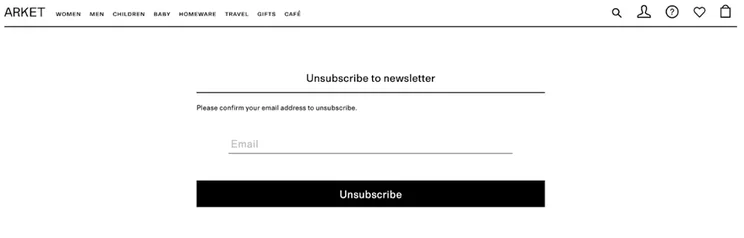
Nordic clothes brand Arket keeps things characteristically cool and simple with its pared back unsubscribe process. Simply click “unsubscribe” from any email and all they ask is for you to confirm your email address.
Simplicity in the unsubscribe process is important. You don’t want to make your customers jump through hoops to unsubscribe. Keep it simple, keep it quick, and you may find users are more likely to view your brand favorably and consider re-subscribing again in the future.
Check out the unsubscribe message example from Arket below!
#2. TicketMaster
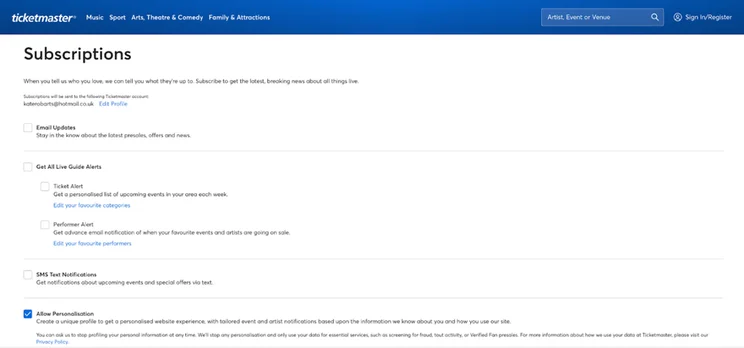
It’s well known that personalized emails outperform generic sends. For this reason, it’s wise to use the unsubscribe journey as an opportunity for users to update their preferences, rather than unsubscribing from everything.
Perhaps they’d like to hear about new offers but aren’t interested in your company newsletter? Or perhaps they’d prefer to be contacted via SMS? Whatever the preferences, personalization can help your customers regain the feeling of control.
We love this unsubscribe email template from TicketMaster, which allows users to choose the future emails they receive, including the opportunity to only receive messages about specific performers. Smart!
#3. Office
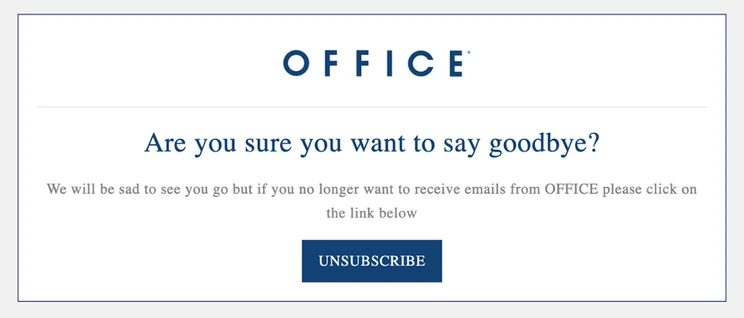
This example from shoe retailer Office keeps it short and sweet while maintaining the brand’s tone of voice. It never hurts to ask your audience if they’re sure they want to leave. They may have even clicked “unsubscribe” by mistake or change their mind. Either way, keeping the message short helps to get to the point and avoid frustrating the user.
#4. Zipcar
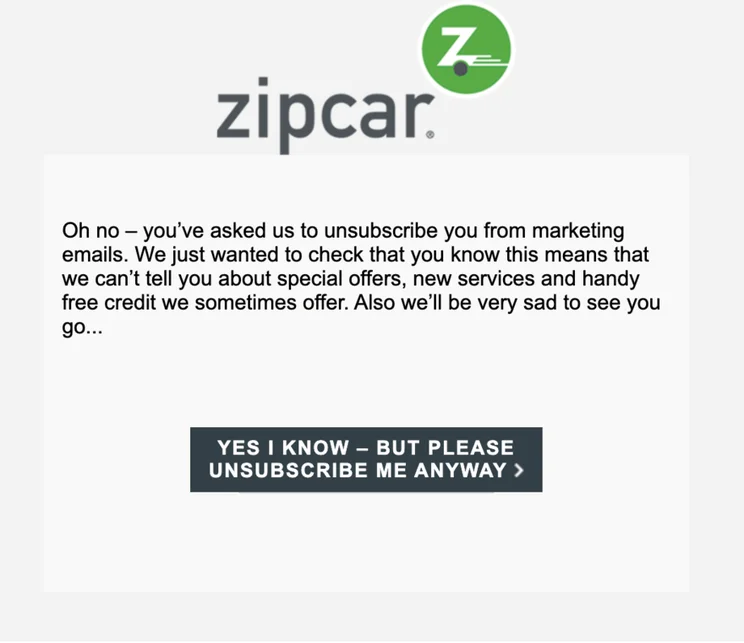
Zipcar has a characteristically fun and chatty brand, and it even manages to bring this tone of voice through to its unsubscribe emails. By playfully asking whether the user really wants to miss out on future special offers, it may cheekily manage to persuade some to stay subscribed.
It’s worth remembering that unsubscribe emails don’t have to be serious: you can still let your brand voice shine through.
Top tip: Struggling for inspiration when writing email subject lines? There’s a few simple rules: keep it short, keep it specific, and avoid spam!
#5. Clarks
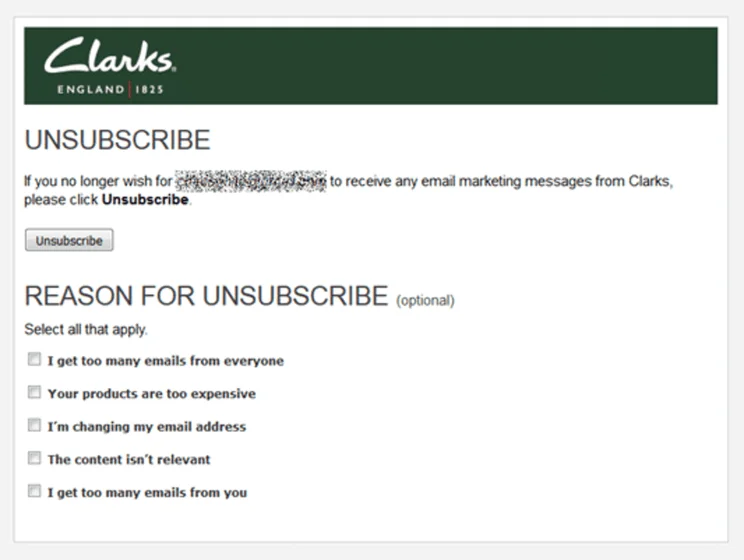
A smart way to understand your audience better is to figure out why they are unsubscribing. This may help to better tailor your content or send emails at a better frequency, or work out the best time to send emails to your subscribers.
We like how Clarks has used a simple, short survey to gather feedback. Of course, it’s recommended to make the survey part optional, as you don’t want to add any unnecessary barriers to unsubscribing. You could also add an open field text box to allow recipients to provide direct feedback.
#6. Pizza Express
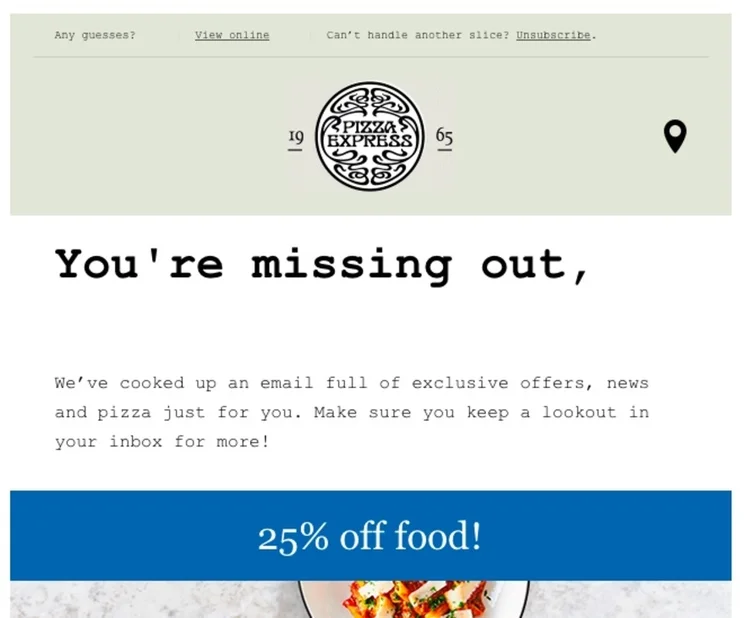
A final email offers a last-bid attempt to persuade your audience to shop with you. Pizza Express uses this tactic by sending a 25% off food coupon with its unsubscribe email confirmation.
This allows the audience to reflect on your brand a little more, and they may even be tempted to stick with you and claim the offer.
It’s worth remembering that the coupon or offer will usually have to be a generous one to persuade people to stay – more generous than the offers they’re already used to seeing. Plus, deploy this tactic with caution. You don’t want to come across as desperate!
Unsubscribe Email Top Tips
We’ve reflected on some brilliant examples of email unsubscribes, but what are the top tactics you should use in your own messages? Read on for a quick top six reasons:
- Keep things simple. You want to make the unsubscribe process as seamless as possible for your audience. Always display the unsubscribe button clearly at the bottom of emails, and ensure there are as few clicks involved as possible.
- Ask your audience why. A short survey is a brilliant way to understand why the recipient wants to leave, and helps you to tailor your future communications accordingly.
- Reinforce your brand. An unsubscribe email doesn’t have to be dull! Write the messaging in your company’s tone of voice to help reinforce the brand and consider using playfulness or humor.
- Personalize their communications. Instead of unsubscribing completely, a short preference survey can help tailor your communications to specific interests, frequency, or types of emails.
- Promote a special offer. A discount or money-off coupon might tempt a potential unsubscriber to stay.
- Confirm once they’re unsubscribed. Either via the browser or by sending a short, final email. This is best practice to confirm the action the user has taken has been successful.
Summary
Thank you for reading our top tips for unsubscribe emails, a topic you may have given little thought to before! We hope our unsubscribe email templates and examples have shown there’s plenty of scope to be creative with your own emails.
By incorporating email unsubscribes into your wider email marketing strategy, you can reinforce your brand, maintain a healthy email database, and even (sometimes) retain customers.
FAQs
By this we mean the whole journey from the moment a user decides they want to unsubscribe, the action they must take to unsubscribe, and any subsequent messaging and confirmation.
Laws vary by country, but in the USA the law states clearly that you must include a clearly obvious way for subscribers to opt out of your commercial messages.
It can help to make the process more straightforward and seamless for users, and avoid them making any complaints. It can also help to ensure a more engaged audience database. Plus, it can even be an opportunity to win back customers.


0 comments