
Since Meta added reels to Instagram back in 2020 and Facebook the following year, the short-form video format has grown in popularity and become a staple part of many businesses’ social media strategies. But while Meta’s ownership of Instagram and Facebook ties the platforms together in many ways, the potential reach, engagement, and monetization of reels varies greatly between the two.
So, Facebook Reels vs Instagram Reels – which platform is best to invest your business’ time into? To help answer this dilemma, I’ll outline their key differences and the pros and cons of each. I’ll also provide some guidance on utilizing them to the best effect for your business.
Facebook Reels Vs Instagram Reels
Facebook and Instagram are both owned by Meta, so it’s not a surprise that their reels share many similarities. To start with, reels on both platforms serve the same general purpose: To create short, engaging video content and use it to reach new audiences and drive engagement from your existing followers.
You’ll also have the flexibility to create Instagram and Facebook reels on the platforms’ mobile apps, or on a desktop on Meta Business Suite.
But once you start to delve deeper, it becomes clear that Facebook and Instagram have some key differences:
Audience Demographics
Facebook is the most popular social media platform worldwide, with over three billion monthly active users compared to Instagram’s two billion monthly active users.
Facebook also has the most diverse user demographics across age groups and interests, whereas Instagram’s audience skews younger, (most commonly falling between the ages of 18-34). For this reason, Facebook may be more suitable if your business requires mass reach.
Content Creation
Both platforms provide a range of editing features for reel creation, such as trimming, adjusting speed, and adding music and voiceovers. However, Instagram offers more choice and creative freedom because of its wide range of stickers, effects, and templates.
However, if you’re creating a reel on Meta Business Suite, keep in mind that many of the advanced settings, such as scheduling, drafting, and adding collaborators to reels, are only possible for Facebook reels – something to keep in mind if you like to bulk create content.
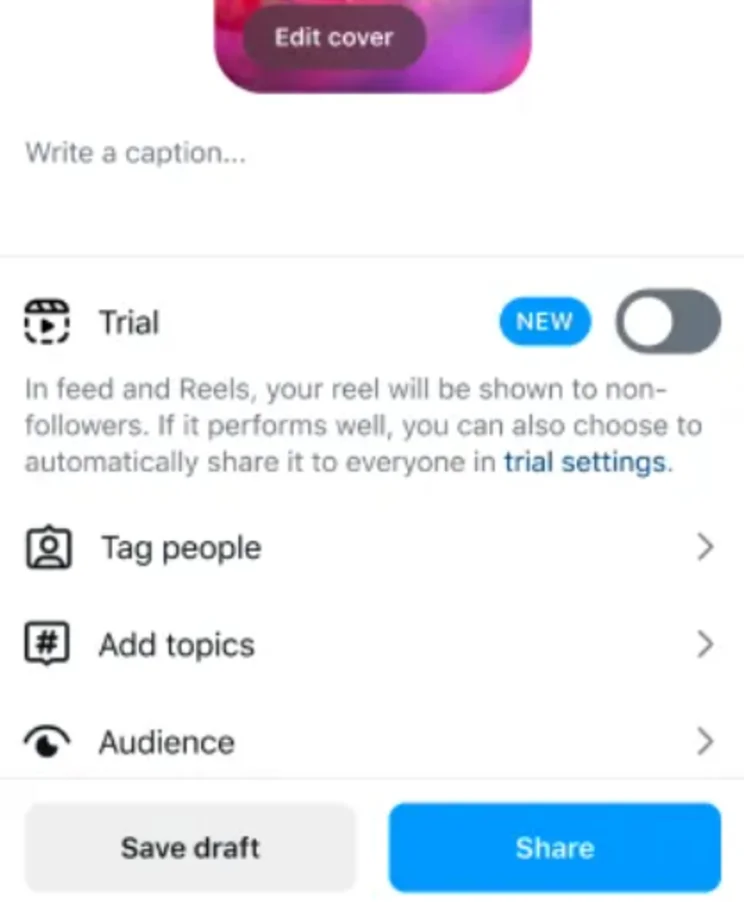
Top Tip: Instagram’s new Trial Reels feature lets businesses test new content types for feedback before sharing them with followers.
Reach and Visibility
When publishing a Facebook reel, the audience is set to public by default, and your reel could appear in a user’s feed even if they don’t follow you. In contrast, your Instagram reels can be discovered on the “Reels” tab, but will only show on the main feeds of those following you. Because of this, the organic reach is much higher with Facebook.
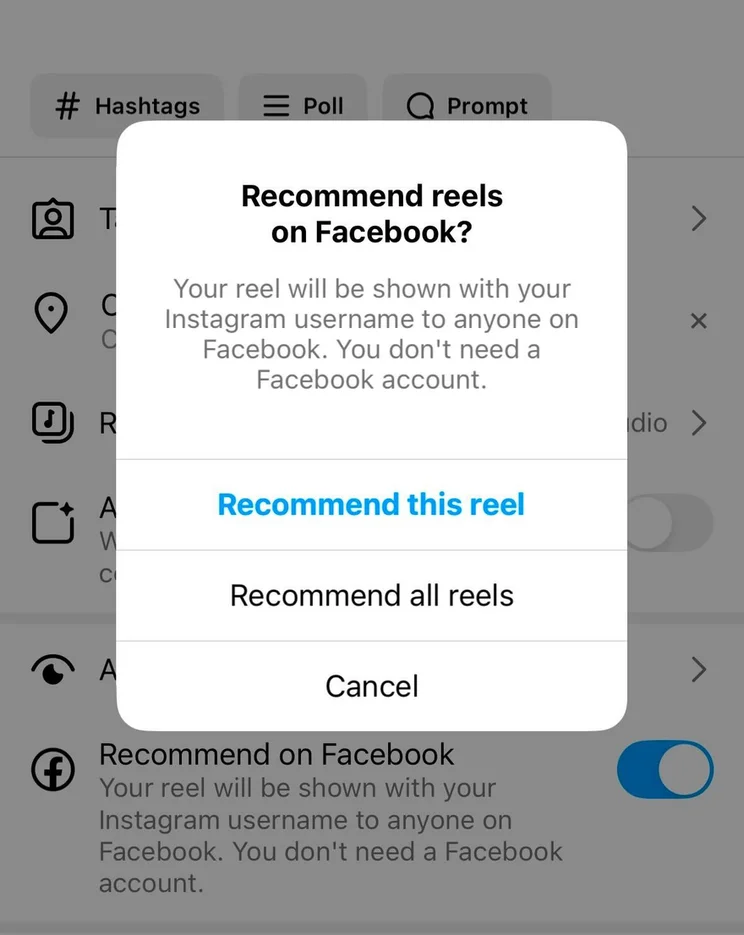
Top Tip: There are a few things you can do to increase the visibility of your Instagram reels. By enabling the “Recommend on Facebook” toggle, you can make them appear on Facebook users’ feeds too. I’d also recommend pushing your Reels onto your main feed, so your current audience can engage with them as well as new audiences within the Reels platform.
Monetization Features
Ads on Facebook Reels used to be an easy way to earn money by placing ads on your Facebook Reels. However, as of September 2024, enrollment is closed due to a transition to a new Content Monetization scheme – which is invite-only, and in its testing period. Unfortunately, this means that the majority of Facebook businesses aren’t able to monetize reels until the new scheme is live, which Facebook has reported will be at some point in 2025.
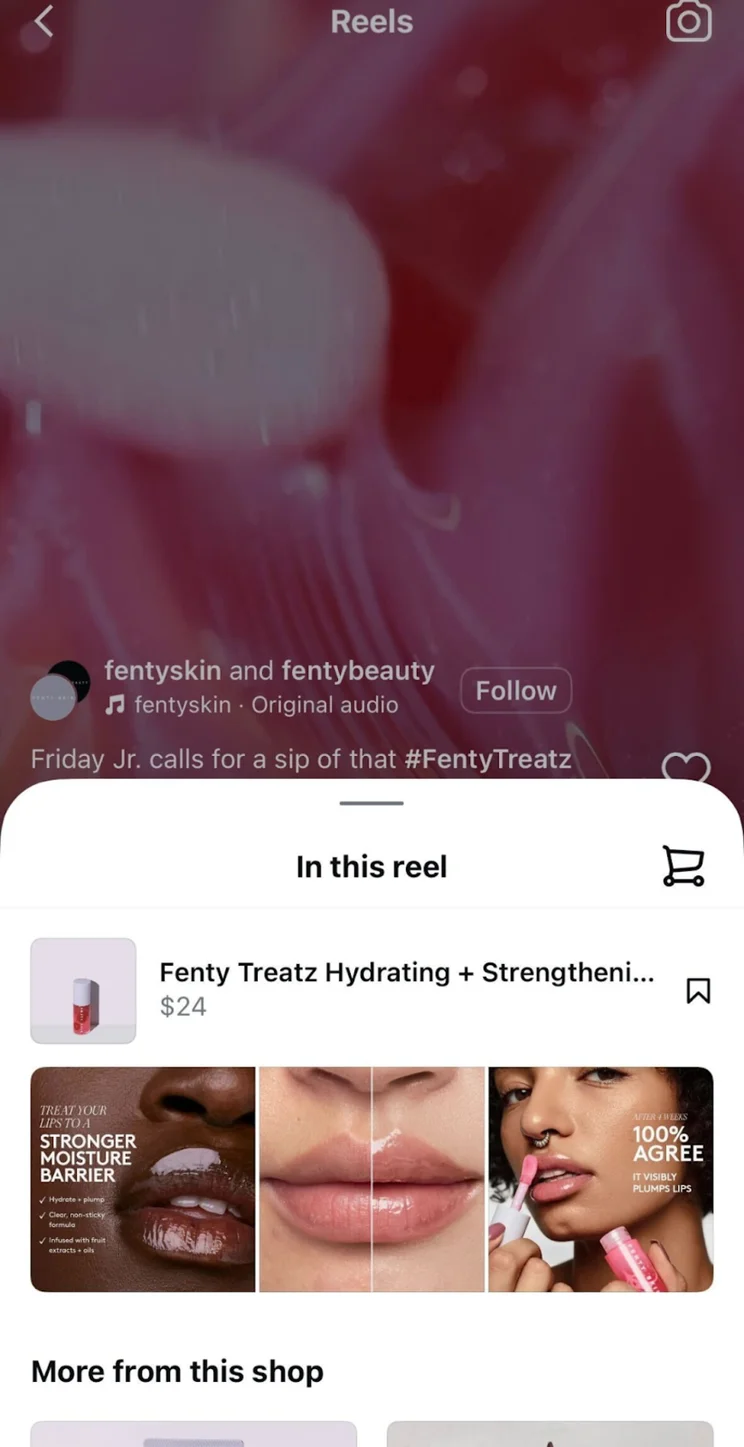
If you have an Instagram Shop, however, you’ll be able to make money on Instagram Reels by tagging your Instagram Shop products in your content, meaning that viewers can shop directly from your video. In contrast, Facebook doesn’t have native checkout features, and it will delete the shopping tags of any Instagram reels you share.
Analytics
Once you post your reels to Facebook and Instagram, you can track their progress within their respective apps.
The reel analytics provided by both platforms are neck and neck. On both platforms, you’ll be able to view the likes, saves, shares, and comments your reel receives, as well as engagement metrics such as the views, average watch time, and overall accounts reached.
Things get more murky if you recommend an Instagram reel to Facebook. Meta explains that, in this case, its play and like count “may” include plays and likes from Facebook. This is confusing at best, but also brings the accuracy of your analytics into question.
Facebook Reels vs Instagram Reels in Action
Here are two case studies that demonstrate how Facebook Reels and Instagram Reels can be successfully used by businesses:
Arla Foods: Facebook Reels
Arla Foods is a Denmark-based producer of dairy foods – the largest of its kind in Scandinavia.
Arla partnered with Meta to differentiate its brand from its rivals, and – through a focus on product quality – stay relevant in an uber-competitive space.
Arla’s ads were created for Facebook Reels, but also ran on YouTube, Instagram, and TV, with the concept of showcasing the message “Bye bye lactose” in a series of eye-catching videos.
The results? Arla’s Facebook Reels marketing campaign indicated that Facebook Reels delivered 2.5 times higher reach, per euro invested, than TV ads; and that, compared to YouTube, ads on Meta apps had four times higher message association. What’s more, Arla’s Meta-based ads had a 72% lower cost per point of message association lift – which, to cut through the marketing lingo, means they were an extremely cost-effective way for Arla to advertise.
➡️To read more about Facebook Reels and Arla Foods’ collaboration, check out the full case study.
TUI UK & Ireland: Instagram Reels
TUI – a travel and tourism company servicing the Irish and UK market – added reels to its Instagram strategy and saw swift success.
Its goal? To raise awareness about its summer holiday promotions in the UK.
To achieve this, TUI bolstered its usual social media marketing campaigns with video- and image-based ads in its Feed and Stories placements on Instagram (and Facebook). The relatable, engaging ads – which featured people on vacation, with a strong call to action (CTA) – were a hit with TUI’s target audience.
The results? For TUI, Instagram delivered:
- 3.7-point lift in campaign awareness
- 10% lower cost per reach
- 5.3-point lift in campaign ad recall
➡️To learn more about TUI’s success with Instagram Reels, explore the full case study.
Top Tip: Some great ideas for boosting your business on Instagram are to use the poll or vote features to drive engagement, ask a question to provoke discussion in the comments, or even run a competition. Because Instagram Reels are not public by default, competitions where you ask users to “tag a friend for a chance to win” can be super successful.
Pros and Cons of Facebook Reels
- As the world’s most popular social media platform, Facebook gives you the biggest potential audience across all age groups
- Reels are public by default, making them more likely to be discovered by new users
- Video quality is sometimes regarded as being lower than Instagram
- Facebook is perhaps not so well known for its Reels as Instagram.
Pros and Cons of Instagram Reels
- You can cross post from Instagram to Facebook
- Instagram is well known for lifestyle content, such as fitness, food, and fashion trends, so may be particularly suitable for these types of businesses
- Tag users to collaborate with other brands, allowing access to new audiences
- Instagram tends to enjoy greater video quality and a wider range of editing features
- Can be more suitable for reaching a younger audience, with two thirds of its audience aged 35 or younger
- Videos are not automatically public, meaning they can be less likely to be seen
Tips for Creating Engaging and Effective Reels
Whether you’re planning to implement Facebook Reels, Instagram Reels, or both into your business’s social media marketing strategy, you’ll need to be able to craft high-quality, attention-grabbing videos that resonate with your target audience.
Here’s a quick, step-by-step guide to explain how.
1. Understand Your Audience and Goals
Before you start creating Reels, take the time to understand your target audience and your content’s goals. Knowing who you’re trying to reach – and what message you want to convey – will guide the entire video creation process.
2. Craft a Compelling Story
Storytelling is key to engaging your audience – so start by planning your Reel with a clear narrative or theme. Use a beginning, middle, and end structure to keep viewers interested and invested in your content, with a strong CTA to cap it off.
3. Optimize Video Quality
Ensure your Reels are visually appealing by optimizing video quality. Use good lighting, a stable camera, and shoot in high resolution. Crisp, clear visuals will make your content look more professional and render easier on the eye.
4. Incorporate Trending Sounds and Music
Music sets the tone for your Reels – and, with Meta’s new “Grooves” feature for Facebook Reels, there’s less excuse than ever to kit your videos out with the perfect soundtrack. To do this, be sure to stay updated on trending sounds and music within your niche or industry; choose tracks with the ability to complement your content, and that will enhance the overall viewing experience for your audience.
5. Experiment with Editing Techniques
Experiment with various editing techniques to make your Reels visually dynamic. Use jump cuts, transitions, and overlays to add flair to your video; keeping edits tight and snappy to maintain viewer interest.
6. Leverage Text and Captions
Incorporate text and captions to convey important information or enhance storytelling. Use bold, readable fonts with contrasting colors to ensure your text is easily visible on the screen.
7. Engage with Trends and Challenges
Participate in popular trends and challenges to boost the discoverability of your Reels. Capitalize on trending hashtags to create content that aligns with what conversations on social media are already saying – and, if you do it right, what they’re going to be saying next!
8. Utilize Instagram and Facebook Features
Take advantage of unique features on Instagram and Facebook, such as stickers, filters, and interactive elements. (We’ve listed these out above!) These can add a creative touch to your Reels and encourage engagement from your audience.
9. Cross-Promote on Both Platforms
Maximize the reach of your Reels by cross-promoting them on both Facebook and Instagram. Share your Reels as posts and stories, leveraging the strengths of each platform to reach a broader audience.
10. Encourage Audience Interaction
Encourage audience interaction by asking questions, using polls, or incorporating CTAs in your Reels. Engaging with your audience builds a sense of community and increases the likelihood of your content being found, watched, and shared.
Facebook Reels vs Instagram Reels: Summary
Thank you for reading! We hope you’ve found this article useful in illuminating the world of Facebook Reels vs Instagram Reels. Instagram Reels may be a more established and sophisticated way to create content, but Facebook Reels cannot be underestimated in their power to reach huge audiences.
Whatever your business type, remember that video content is king, and Reels are the most surefire way to grow your business on social media. Ultimately, we’d recommend experimenting with both Instagram and Facebook Reels. By posting on both, you’re doubling your chances of going viral!


1 reply
1 reply