
We all want to drive more sales, right? But with limited resources and rising costs, it can be tricky to know exactly where to focus your efforts. In this guide, we walk you through sales funnels and how these can help you better understand the customer lifecycle.
By helping you break down each stage of the customer lifecycle, sales funnels can also help you understand which areas should be optimized to help drive better results.
Understanding the Basics of a Sales Funnel
The sales funnel is the journey your customer takes from first hearing about your product or service to eventually making a purchase. Although the steps vary between each industry and business, there are four stages that are common across the board:
- Awareness – becoming familiar with the brand/product/service
- Interest – learning more about the brand/product/service
- Decision – deciding whether to buy the product/service
- Action – buying the product/service
Identifying how customers interact with your business at each stage of the sales funnel will help you do two essential things. Firstly, you can see where customers are stopping their journey toward a purchase. Following this, you can then make changes to your funnel to decrease the number of people who do not make a purchase.
More Information
- Content Marketing Pyramid: Learn more about this marketing strategy with our detailed guide
The 4 Stages of a Sales Funnel
As we mentioned above, sales funnels typically have four stages. In this section, we explore each of these stages in more detail.
Awareness: Attracting Potential Customers
The awareness stage is much as it sounds. It’s when a potential customer becomes aware of your product/service/brand. This stage is essential and can’t be skipped. After all, no one can buy from you if they don’t know you exist.
To grow awareness, you first need to know exactly who you’re targeting – customer and market research will help you do this. This could involve desk-based research or customer surveys to get to grips with who your current customer base is.
Once you know who you’re targeting, it’s time to start marketing your business. For example, you could develop a social media strategy or improve your website’s SEO. The main aim is to make existing and potential customers aware of what your business offers. More complex and specific marketing messages can be applied later down the funnel.
Interest: Engaging With the Prospects
Now you’ve identified your target audience and increased their awareness of your business and offering, it’s time to develop interest.
This will include using marketing methods to help customers develop a better understanding of your offering. Where short-form content such as social media posts are used to develop awareness, methods such as starting a blog or sharing webinars and eBooks, can be used to inform and educate customers, helping to create higher levels of interest.
It’s crucial that you add value with content at this stage. This is because you want to be seen as the “go-to” in your niche for information. Value can typically be provided through education or entertainment.
Decision: Persuading Prospects To Buy
When your customer is suitably informed about your offering, they’ll need to make the all-important decision:
“To buy or not to buy?”
At this stage, you can encourage higher volumes of “to buy” decisions by crafting compelling offers such as generous discounts or limited-time offers. You also want to build further trust at this point by using testimonials and customer reviews – this will send signals to potential customers that you can be trusted to deliver on your promises.
Your Call To Action (CTA) is also essential to the decision process. Using compelling messages which generate urgency can improve your conversions. For example, you could include CTAs that say “Don’t miss out, buy now” or “Limited availability: Buy now”.
Action: Finalizing the Sale and Encouraging Repeat Purchases
Your customer is finally ready to buy. But the sales funnel doesn’t stop there!
It’s important to keep your customer engaged throughout these final stages. After all, the sale isn’t finalized just yet. In fact, some studies suggest that 70% of online shopping carts are abandoned. This is, at least in part, due to complex and frustrating checkout processes.
Taking time to simplify your processes and streamline your checkout page will help limit potential drop-offs. An excellent example of this can be found with online retail giant Amazon and the success of its “one-click purchase button” which makes the checkout process as fast and easy as it possibly can be.
Once your customer has checked out, you can also increase future success by using consistent follow-up strategies and maintaining customer relationships. This can include methods such as email marketing to help cross-sell related products.
Strategies to Optimize Each Stage of the Sales Funnel
Understanding the four stages of your sales funnel will help you understand how your customers come to purchase from you. In this section, we explore several proven strategies to help optimize each stage of your sales funnel.
Data-Driven Marketing
Marketing is no longer about making best guesses about what your customers do and want. With digital purchases comes a digital trail of data that can be used to see exactly what your customers are doing.
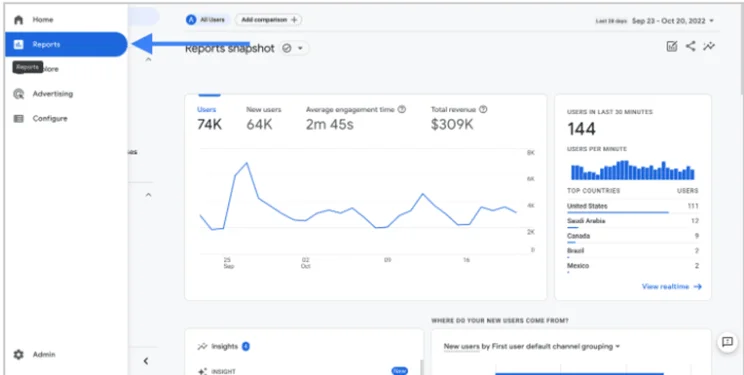
For example, tools such as Google Analytics can be used to see essential information such as which pages on your website customers are spending time on, which links they’re clicking, where they’re finding your website, and where they’re exiting your website. Many ecommerce website builders also provide this sort of information from within their platforms.
This data can be used to make informed decisions about where to make changes and focus your marketing efforts.
A/B Testing
A/B testing is a simple yet powerful method to help you optimize your online store. This works by simply testing two options to see which is most effective in driving more sales.
For example, you may create two product pages that use different layouts. You serve both pages to similar audiences and then analyze which version generates the best results.
It’s important to only change one factor when A/B testing, otherwise it becomes difficult to see which factor has had a positive impact on your sales funnel.
Personalization
Personalization can be applied to your sales funnel in several ways. For example, you may use customer data to email them personalized recommendations for products that you know may be of interest.
Using personalization can help customers feel valued and help you deliver the most relevant and useful information or recommendations.
Retargeting
Retargeting is the process of collecting data on people who visit your website or app and then using that data to target them with ads on other platforms (such as social media) or via email marketing.
Retargeting can be used at almost every stage of the customer journey to drive customers down the sales funnel. It’s one of the best ways to streamline customers through the funnel once they have become aware of your brand, product, or service.
For example, once a customer has become aware of your brand. you may use retargeting to continue serving that customer ads or emails to inform them of the benefits and uses of your products. Equally, once a potential customer has been educated you may use retargeting to help encourage sales. Finally, you can also use retargeting to engage with customers who have abandoned carts or to sell further products to customers who have already made a purchase.
Tools and Technologies for Building an Effective Sales Funnel
Luckily, countless tools on the market can help when building a sales funnel. We list and give examples of the most common and beneficial tools below:
- Customer Relationship Management (CRM): Used to track and manage customer interactions with your brand. Some great examples of powerful, yet easy-to-use CRMs include HubSpot, Salesforce, and ZOHO.
- Email Marketing Software: This will help you track, store, and segment your email marketing sign-ups. It can also be used to create compelling emails and send them out to your customers. Some popular email marketing software includes MailChimp, Constant Contact, and HubSpot.
- Analytical Tools: Tools such as Google Analytics are a powerful way to gain insight into the customer journey. Many website platforms such as Shopify, Wix, and Squarespace also have built-in analytical tools which can offer you insight into your sales funnel.
Common Pitfalls To Avoid While Building a Sales Funnel
Now you should have a better grip on how to build a sales funnel for your business, but what should you avoid? Follow these rules to steer clear of common pitfalls when building your sales funnel:
- Don’t ignore your customer journey
- Don’t fail to test and optimize your funnel using the methods and tools we’ve outlined in this article
- Don’t fail to personalize your customer communications
- Don’t neglect post-purchase engagement with customers
Successfully avoiding these pitfalls will help you drive higher volumes of traffic through your funnel, help you build brand trust and ultimately make more sales.
How to Build an Effective Sales Funnel: Summary
Small business owners and entrepreneurs need to get to grips with their sales funnel. Once you understand the journey your customer goes through to purchase, you can then optimize each of those stages to drive better results.
Your sales funnel doesn’t need to be perfect to have a positive impact on your business. Simply use the steps we have outlined in this guide to get started. Then, over time, make improvements to reduce friction and improve conversions.
So, what are you waiting for? Let us know in the comments if you have additional questions for our experts!


0 comments