
In 2026, nearly half of US small businesses are increasing their prices to protect their margins. Facing high operational costs and external challenges, such as tariffs and tax changes, SMBs are focusing on stabilizing their business over the next six months. And, if you’re looking to build an online store this year, setting your pricing strategy early is key to success.
We surveyed 300 SMBs in January to find out how they’re navigating the current economic climate, justifying price increases, and retaining loyal customers. Read on to find out what they said, and how to adjust your own strategies over the coming months.
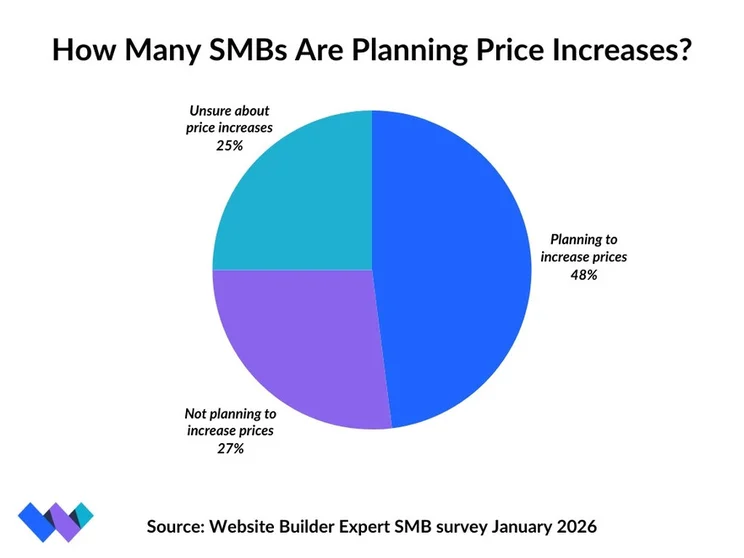
- 48% of small businesses want to raise prices in the next six months
- Most SMBs are planning for a 2.1-5% price increase
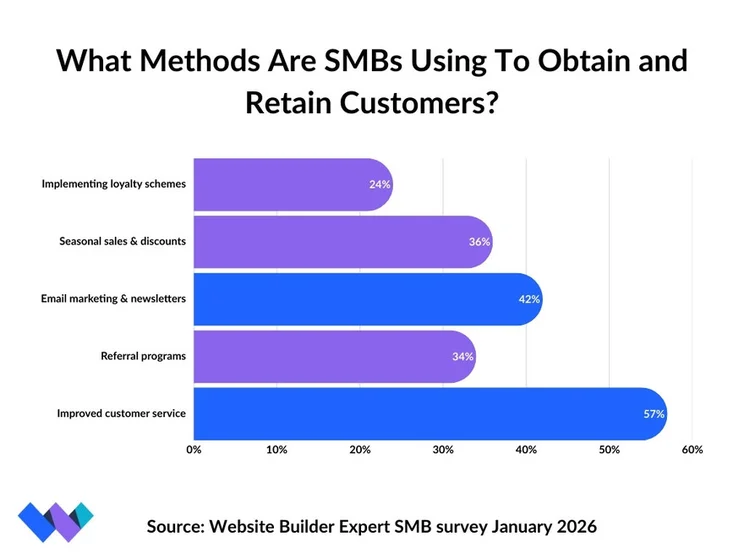
- Improving customer service is the top customer retention strategy for businesses
SMBs Are Raising Prices: Should You Join Them?
Based on our survey, 48% of small businesses plan to raise prices in the next six months. This is up from 2025, when only 36% of SMBs considered increasing prices.
Expansion is no longer the immediate goal for the majority of businesses – instead, business owners are looking to save money by reducing costs internally.
With the One Big Beautiful Bill Act (OBBBA), new tax changes in 43 states, and annual filing fees, SMBs are hoping to find short-term relief by increasing prices. While it’s not a long-term solution, it’s a quick fix to protect your margins while navigating the complexity of tariff and tax changes.
After all, our survey found that the majority of operating expenses for businesses go towards taxes and regulations compliance. Right now, the focus for most business owners isn’t expansion, it’s preservation.
How Much Should You Increase Prices By?
We asked business owners how much they plan to increase their prices by, and the majority of SMBs want to raise prices by 2.1-5%. You can see a full breakdown below:
- 39% will increase prices by 2.1-5%
- 33% will increase prices by 5.1-8%
- 11% will increase prices by 8.1-12%
- 8% will increase prices by 0.1-2%
- 6% will increase prices by 12% or more
- 3% aren’t sure
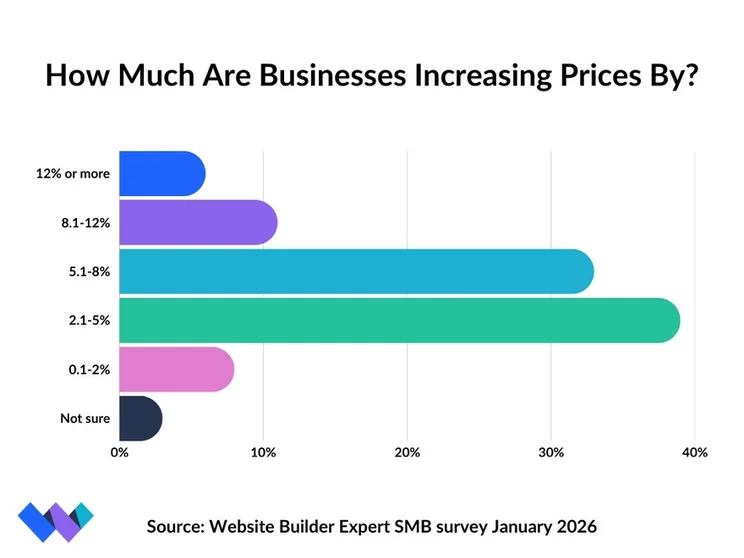
As you can see, most SMBs are playing it cautious with a 2-5% increase, but a large number (44%) of the businesses we surveyed are considering a higher increase of 5-12%.
The Pros and Cons of Raising Prices
While raising prices can protect your profit margins, it also puts you at risk of losing customers and sales to competitors.
Of the 322 small businesses we spoke to, 1 in 4 aren’t sure whether to increase prices. If you’re also undecided, I’ve listed the key pros and cons below to help:
✔️ Pros
- Alleviates the financial pressures of higher operational costs
- Usually results in larger profit margins
- Works well for brands with loyal customer bases, though you’ll need to invest in customer retention strategies
❌ Cons
- Limits your potential for long-term growth if prices are too high
- There’s a higher risk of losing customers and damaging your brand reputation
- Need to invest in retaining customers
Value-Based Pricing Strategy: Justifying Your Price Increase
Customers won’t want to pay extra for no reason, so you must highlight the value your business provides to justify the higher price.
When setting your new prices, assess the current market and consider how you can improve the customer experience too, whether that’s through responsive service or personalized messaging. This is the best way to build brand trust and loyalty, while also growing your profits.
We asked SMBs about the methods they’re using to find new customers and retain their existing audience, and there were two clear winners: improved customer service and email marketing.
1. Improved Customer Service
As of January 2026, improving customer service is the number one customer retention strategy for SMBs. If you can provide high-quality shopping experiences, responsive customer support, and transparent communication, your business is more likely to keep customers happy and encourage them to return.
As a result, your business could see an increase in engagement and sales.
A positive customer experience can make your target audience feel valued and listened to, so they’re more likely to stick around if you increase product prices.
2. Email Marketing
After improved customer service, 42% of SMBs use email marketing to connect with customers. Personalized newsletters, welcome emails, and targeted messaging are a great way to build a positive relationship between your business and customers.
Adding a personal touch, with a customer’s name or recommended product based on their recent purchase history, really helps build brand trust and loyalty. And, if you need a helping hand with your emails, you’re not alone – in fact, nearly half of all SMBs use automation or AI to support with personalized marketing and writing.
When we asked about customer retention strategies, customer loyalty schemes were the least preferred method, with only 24% of SMBs using this approach. While it’s important to foster brand loyalty with your customers, a dedicated loyalty program is only really sustainable if your business already has a loyal and engaged following.Strategies such as improving customer service and generating personalized marketing can be adopted by businesses of any size, without investing too much money or time.
Mistakes To Avoid When Raising Prices in 2026
Of course, raising prices is a risky move and one you need to consider strategically as a business. Here are a few mistakes to avoid:
- Apologizing for the price increase – as a business owner, be confident in your decision to increase prices and remind customers about the benefits of shopping with your brand
- Keeping customers in the dark – be transparent about any price changes you’re making, so customers are prepared for the prices they’ll see at checkout
- Responding negatively to feedback – increasing prices will result in disgruntled customers, so make sure to respond to any negative feedback in a calm and professional manner
- Neglecting long-term planning – while reactive price hikes can help your business increase profits initially, you need to consider how your business plans to succeed over the next few years
- Not educating yourself on external challenges – our survey found that 60% of businesses aren’t changing their financial plan in response to tariffs, largely because they’re confused about complex tariff policies and regulations
Adapting to changing regulations will allow longer-term planning and put you in a stronger position than competitors. If you feel clueless about the latest tariff changes or the upcoming tax season, check out our guides on the 2026 US tax season, increasing prices in response to tariffs, and our US tariff tracker.
Your 2026 Pricing Strategy: Next Steps
With almost half of SMBs looking to raise prices in the next six months, it’s something every business owner should consider if they want to compete in the market and stabilize their overall costs.
Going forward, ensure your business focuses on delivering a high-value, high-quality experience to customers. By investing in the right areas and tools, especially in customer service and email marketing, SMBs will find it easier to justify price increases and build a more loyal and less cost-sensitive community online. This will help your business react strategically to any future economic challenges.


0 comments