
Are you comparing ecommerce website builders Adobe Commerce (Magento) vs Shopify for your online store? Shopify is the best ecommerce website builder we’ve tested, based on over 200 hours of research. However, the two options cater to very different audiences.Shopify is an easy-to-use, low-maintenance solution to get your business online, particularly if you want to scale your store and build your inventory. On the other hand, Adobe Commerce is an open-source platform, like WordPress – it’s complex for beginners, includes additional costs, and is better suited to enterprise-level businesses that can manage and delegate the workload.
Shopify: Best for Growing Online Stores
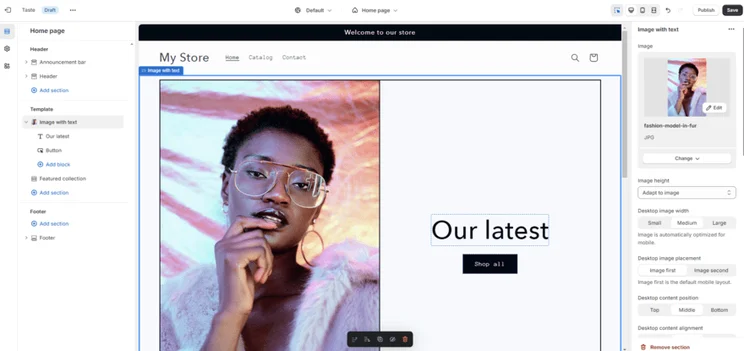
Shopify is our top-rated ecommerce website builder, outperforming the industry’s finest options in our most recent round of testing. It boasts mobile-responsive templates, AI-powered tools to help business owners save time, and unparalleled sales features, such as abandoned cart recovery and multichannel selling.
I recommend Shopify for businesses looking to scale and grow online, particularly if you have an extensive list of products. However, Shopify isn’t the most suitable option for small businesses due to its expensive plans – paying more for features your business won’t need isn’t necessary.
What I like:
✔️ The robust product backend made it easy to edit and manage my inventory during testing
✔️ Every plan includes impressive sales features, such as unlimited products and the ability to create discount codes
✔️ There are over 8,000 Shopify apps available to add extra functionality to your store, including recognizable integrations like Mailchimp and TikTok
✔️ The editor is straightforward to understand and pulls through product data from the backend
✔️ I could reach out to Shopify’s 24/7 customer service via live chat, or dig into the Help Center to find answers myself
What I dislike:
❌ Shopify’s plans are expensive to start, especially for small business websites – but it can be worth the money if you have the budget to spare
❌ Only basic functionalities are available as built-in features, such as standard site analytics
❌ I had limited free templates to choose from, with premium options ranging from $140 to $400
❌ The section-based editor can feel restrictive, limiting my options when moving elements or sections around
How Much Does Shopify Cost?
Shopify’s pricing ranges from $29 to $299 per month (billed annually), split across three premium plans. Unfortunately, Shopify isn’t the best value for money with its expensive plans, targeting established businesses instead of smaller stores.
That said, you can try before you buy with Shopify’s three-day free trial and get your first 3 months for $1/month with Shopify’s introductory deal.
Plus, if you’re simply interested in selling on socials, there’s a cheaper $5 per month Shopify Starter plan – this comes with a stripped-back website and standard sales tools, making it ideal for entrepreneurs. For enterprise-level businesses, Shopify Plus offers customizable solutions and support, with pricing starting from $2,300 per month.
Adobe Commerce (Magento): Best for Enterprise Businesses
Did you know Magento is now known as Adobe Commerce? While the Magento name still floats around, Adobe acquired Magento back in June 2018 and rebranded Magento Commerce to Adobe Commerce in April 2021.
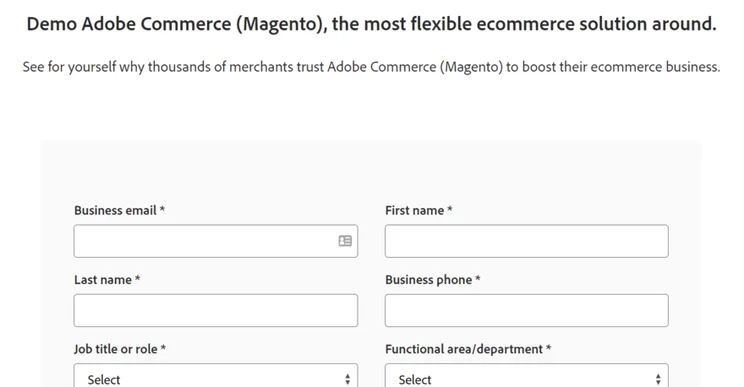
Adobe Commerce, formerly Magento, is a complex option for building an online store. It’s an open-source platform, which means users must pay for and manage extras like web hosting, domain names, security, and templates themselves. This is similar to WordPress, but less beginner-friendly and accessible than traditional website builders, like Wix or Shopify.
As a result, I don’t recommend using Adobe Commerce if you’re a complete beginner or a small business. The complex editor makes it a better option for individuals with coding experience, or large enterprises with the resources and budget to work on the site. For example, Canon and Coca-Cola use Adobe Commerce for their business websites because of the flexibility and scalability granted by the platform.
In comparison, Shopify is favored by both small and large businesses, including celebrity brands like Beyoncé’s haircare brand, Cécred.
What I like:
✔️ For the tech-savvy, there are no limits to what you can design thanks to the flexibility of Adobe Commerce’s editor
✔️ You can use AI tools to generate personalized experiences on your website, such as timely promotional offers
✔️ There’s no need to worry about outgrowing your website since Adobe Commerce seamlessly helps you scale it with reliable site performance and monitoring tools
✔️ You can connect your website with popular Adobe integrations, such as Adobe Analytics and Adobe Experience Manager
What I dislike:
❌ It’s best to use if you have coding knowledge and skills, meaning it’s less accessible and user-friendly than website builders
❌ Adobe Commerce is difficult to install – you have to fill out a form with your business information to request access, and it’s very hard to find compatible hosting providers
❌ You’ll need to install apps to use popular payment processors, such as Stripe or Square
❌ Most of the templates come with a price tag, ranging from $25 to $500
❌ Adobe Commerce relies on third-party apps for added functionality, such as email marketing – and most of these apps cost extra
How Much Does Adobe Commerce (Magento) Cost?
Adobe Commerce offers a different pricing model in comparison to a traditional website builder, like Shopify. There are two packages: Adobe Commerce Pro and Managed Services. You must contact Adobe Commerce directly for a quote to get specific pricing information.
While Adobe Commerce is free to install, there are additional costs to consider since it’s an open-source platform. These costs will vary depending on your business needs.
For example, you’ll need to organize and pay for web hosting yourself – in comparison, this is something Shopify handles for you and includes in your website subscription. SiteGround is one compatible web host for Adobe Commerce, with plans starting from $2.99 per month (billed annually).
Other costs to factor into your budget include a domain name, extensions, security features, and templates. These add-ons can collectively cost thousands of dollars each month, which is why Adobe Commerce is aimed at very large businesses with budgets to match.
How To Choose a Website Builder
Shopify and Adobe Commerce aren’t the only options available if you’re looking for an ecommerce website builder to get your business online. We’ve reviewed the best of the best, and while Shopify performs incredibly well in our tests, it won’t be the right fit for everyone.
For Shopify alternatives and more user-friendly options than Adobe Commerce, take a look below:
- Wix is ideal for new business owners, offering high-quality templates, internationalization features, and personalized SEO support
- Squarespace is great for selling services online, such as virtual painting classes or fitness videos – it’s also the easiest website builder to use
- GoDaddy is the best value for money, making it a great choice for small or budget-conscious business owners, but its features are much simpler than Shopify’s
Get tips on choosing the right website builder for you in our helpful video:
If you’re still not sure which website builder is right for your business, get a personalized recommendation from our quiz:
What type of website do you want to create?
Find Your BuilderAdobe Commerce (Magento) vs Shopify: The Winner
Both Adobe Commerce and Shopify are popular options for selling online, but the platforms offer very different experiences. To recap, Shopify’s website builder is unmatched for online stores. It’s more user-friendly, provides dependable 24/7 support, and helps you get online quickly so you can start selling to customers.
In comparison, Adobe Commerce is complex and technical – because of this, you should only opt for the open-source platform if you’ve got the resources, money, and coding skills to build a site from scratch. But if you can handle the platform, Adobe Commerce gifts users complete creative freedom to help bring unique brand visions to life.


1 reply
1 reply
1 reply
1 reply